
NEWS
Love pets? Protect yourself and your furbabies from rabies

We can’t help but love our pets. They provide us companionship and comfort, which can benefit us in many ways especially now that we’re spending more time at home. But while pets are undoubtedly therapeutic, unfortunately, they also have the potential to pose a threat to our health. One of these is rabies infection.
A bite or even a scratch of an animal can transmit this virus to humans, which can put you and your pet’s life in danger.
According to the Department of Health, almost half of the annual rabies cases in the Philippines involve domesticated pets. This means that now more than ever, furparents need to be extra vigilant in protecting themselves and their pets.
There are current ways to prevent this such as vaccinating our pets, but it is still essential to know what to do once exposed.In celebration of World Rabies Day last September 28, ZP Therapeutics, a division of Zuellig Pharma Corporation, advocated for early prevention, proper treatment, and control of the disease.
During a virtual event entitled, “Review of Animal Bite Management”, the company took the opportunity to provide continuing education to the healthcare community while spreading information to the public.
General and Laparoscopic Surgeon Dr. Vinzon Valencia, FPSGS, FPCS, led the insightful discussion, which revolved around this year’s theme, “Rabies: Facts, Not Fear”.
It updated participants on the latest rabies information and clinical management. Ultimately, the event highlighted the importance of proper information and how that can greatly help us in our fight against rabies.
How is rabies transmitted?
Protecting ourselves from rabies starts with knowing and understanding the different ways in how it can be contracted. There are three categories of exposure, depending on the severity and area of exposure:
Category I, which is transmitted through:
- Feeding or touching the infected animal, licking of intact skin;
- Exposure to a patient with signs and symptoms of the infection by sharing of eating and/or drinking utensils;
- Casual contact and routine delivery of healthcare to the symptomatic patient.
Category II can be transmitted through:
- Nibbling of uncovered skin, with or without bruising or hematoma;
- Minor or superficial scratches or abrasions without bleeding, including those induced to bleed;
Category III can be transmitted through:
- Transdermal bites (such as puncture wounds, lacerations, avulsions) or scratches or abrasions with spontaneous bleeding;
- Licks on broken skin or mucous membrane;
- Exposure to a rabies patient through bites, contamination of mucous membranes or open skin lesions, and mouth-to-mouth resuscitation;
- Unprotected handling of an infected carcass;
- Ingestion of raw infected meat;
- Exposure to bats;
- All Category III exposures on the head and neck area.
What to do after possible exposure?
If you’ve been bitten, scratched, or may have been exposed to rabies via any of these three categories, immediately wash the wounded with soap and running water for at least 15 minutes.
This is the most reliable way to lower your chances of infection. Dr. Valencia advised against dressing the wounded area, as this will only favor the growth of bacteria and increase the likelihood of infection. Self-medicating is also strongly discouraged, though, for it’s best to just leave the situation to our healthcare professionals.
So if you are seeking help from traditional healers like manghihilot, tandok, or tawak, know that this will just even promote the spread of infection, and it won’t be of any help!
For Category II & III exposures, it is best to see a healthcare provider for post-exposure prophylaxis (PEP) within 24 hours.
Your healthcare provider will assess the patient and shall administer the necessary rabies vaccine or rabies immunoglobulin (RIG) shots. The schedule of these shots will follow WHO’s updated recommendations on the rabies vaccine regimen schedule, as discussed by Dr. Valencia. Make sure not to skip though, for your doses should be completed until Day 7, regardless of the status of the biting animal.
Are there any contraindications on Rabies Immunoglobulin (RIGs)?
Worried about getting your Rabies Immunoglobulin (RIG) after getting exposed? Don’t fret. According to Dr. Valencia, there are no contraindications for rabies vaccines and RIGs. This also goes for breastfeeding and pregnant women, and even someone who has recently received a COVID-19 vaccine.
In view of rabies infection’s risk to our lives, we should prioritize administration of PEP no matter what the case may be. Getting protected from rabies infection is always more important because it can save someone’s life.
Indeed, knowledge is key when it comes to dealing with rabies. As Dr. Valencia said, “Rabies is fatal and irreversible but it is avoidable”.
It can save your life, your loved one’s life, and of course, spare your furbaby from the dangerous disease. Join ZP Therapeutics in taking World Rabies Day as an opportunity to educate ourselves.
Even in the smallest way we can, by spreading facts and not fear, we can all make rabies a thing of the past.










NEWS
BFAR cites success of annual fishing ban in increasing galunggong stocks

1:11 a.m. March 8, 2026
The annual closed fishing season for roundscad (galunggong) has been instrumental in ensuring sustainable yield and enhanced volume production, the Bureau of Fisheries and Aquatic Resources (BFAR) said, citing the success of the science-based approach in Palawan.
BFAR National Director Elizer Salilig said this fishing cycle, which has been enforced for over 10 years, allows the galunggong to thrive in Palawan waters, ensuring ecological balance and economic success for the local fishing industry.
Galunggong is a dining staple among Filipino families, known to be relatively more affordable than other options. In Palawan, it sells for between P150 and P200 per kilo.
“The success of the annual roundscad fishing cycle in Palawan shows what we can do together through science and discipline. It proves that science-based conservation is not a hindrance to the fishing industry, but its greatest ally,” said Salilig.
The National Stock Assessment Program has confirmed the positive impact of the annual fishing hiatus, said Salilig.
The annual fishing ban contributed to improved volume of roundscad production at 3,363.75 MT in the third quarter of 2024, a sequential increase of 55.1 percent. It was the top contributor to the total commercial fisheries production in MIMAROPA, accounting for 27.1% of the total fish catch.
Enforcement of the fishing cycle has also led to a decrease in fishing mortality and the amount of immature galunggong in the catch. The roundscad also showed an increase in average length from 16.8 cm in 2015 to 17.6 cm in 2024, suggesting “improved growth and a healthier, more mature population.”
The closed season for commercial fishing of roundscad in Northern Palawan takes effect every November 1 to January 31 and is lifted between February 1 and October 31. This fishing cycle, implemented via a 2015 administrative order, covers the West Philippine Sea and the Northern Sulu Sea.
This policy leaves the galunggong breeding ground largely undisturbed during the closed season, protecting the species during its peak spawning period.
Salilig thanked the Palawan fishing community for continuing to comply with the annual fishing cycle.
“By respecting the natural spawning cycles of the galunggong, we are not just protecting an ecosystem; we are securing the food supply and the livelihoods of thousands of Filipino fishers for years to come,” he said. #
NEWS
Converge hosts Project PIGLET in Baclayan, donates learning tablets for Mangyan children
8:26 p.m. March 7, 2026
Leading fiber broadband and technology provider Converge ICT Solutions Inc. has come back to Brgy. Baclayan in Oriental Mindoro in celebration of Safer Internet Month, bringing its online safety campaign at the Baclayan Mangyan School, while strengthening the digital capabilities of its students.
Through its Corporate Governance and Data Privacy (CGDP) Group, Converge engaged pupils in Grades 5 and 6 in its Project PIGLET (Privacy Integration through Guided Learning of Emerging Technologies), a program that aims to enhance digital literacy and privacy awareness among school children.
Converge AVP and Head of Data Privacy and Information Security Compliance Team Eumir Paolo Espiritu highlighted that kids nowadays are more susceptible to cyber threats such as deception, fraud, identity theft, malware and computer viruses.
He noted that as early as possible, children should be educated on ways to protect themselves against these, which was why they launched Project PIGLET in 2024.
“Converge intends to visit different regions across the country to reach the unserved and underserved and increase the awareness of kids when it comes to data privacy and information security. At Converge, we leave no one behind, so this Safer Internet Month, we visited the indigenous children here in Mindoro to also promote the more responsible and positive use of digital technology,” he said.
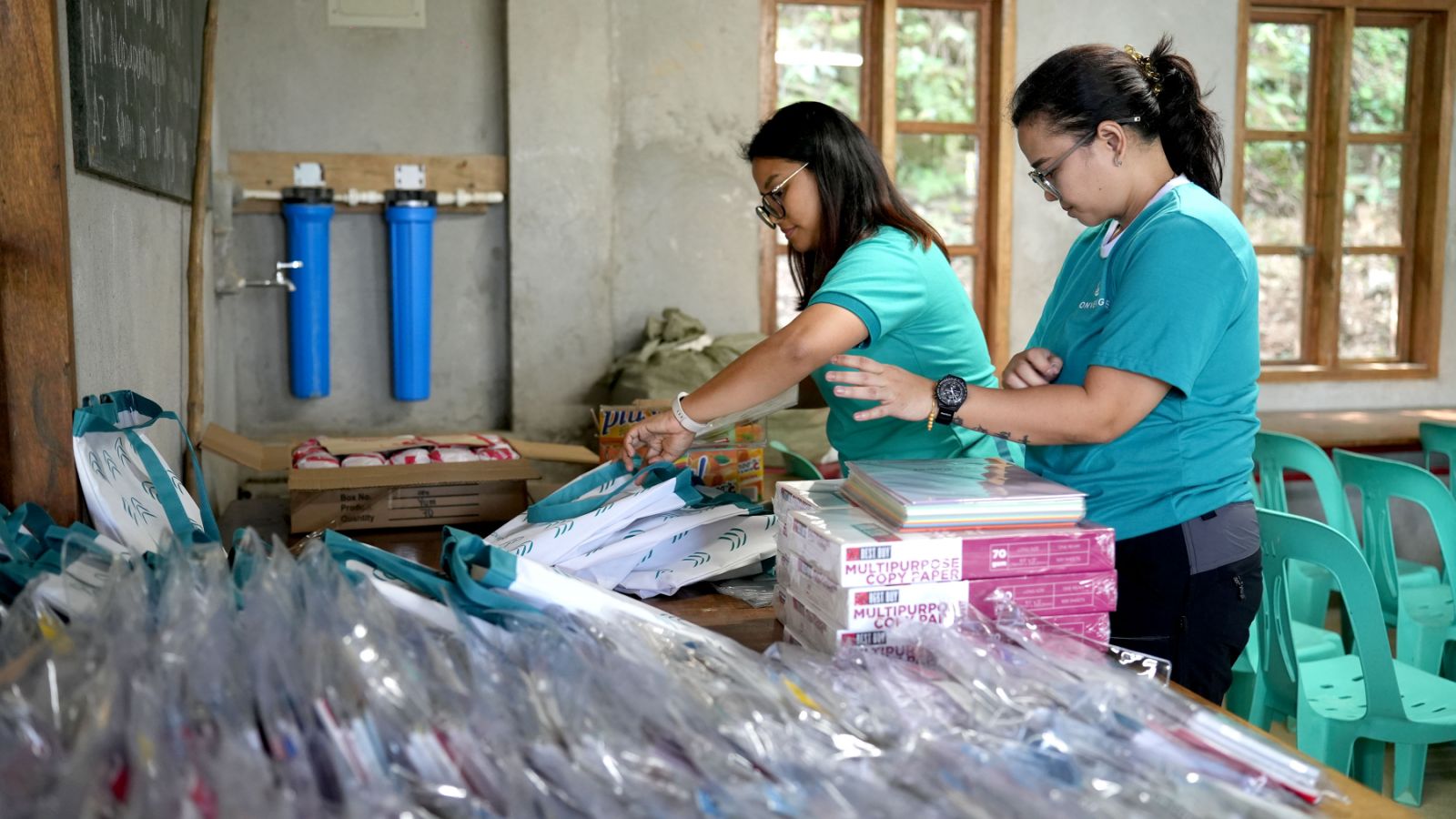
Converge hosted a story telling session, and distributed school supplies and snacks to the kids.
The company also strengthened the school’s digital capabilities as it donated learning tablets and a smart TV at the Stairway Foundation ICT Learning Center, which has been supporting the students’ learning activities, through the help of Mindoro-based child-care organization Stairway Foundation.
“Dahil nga Mangyan school ang aming paaralan, kaunti ang access namin sa equipment kaya malaking tulong ang mga dagdag na kagamitan para sa pag-aaral ng mga bata. Mahalaga rin ang ganitong mga initiative para maging aware ang mga estudyante sa mga nangyayari sa kapaligiran at hindi lang sila gumagamit ng gadgets basta-basta,” said Baclayan Mangyan School Head Teacher III Noemi Bonquin.
The Baclayan Mangyan School provides education to nearly 250 pupils from the different Mangyan tribes in Puerto Galera.
Converge first engaged with the Mangyan community in Brgy. Baclayan in 2023, in collaboration with Stairway Foundation. The team up paved the way for the powering of free fiber internet by Converge at the said ICT learning center and its donation of learning tablets to support the students in honing their digital skills.
Moreover, the company has also worked with the nonprofit in its online safety advocacy in an effort to combat cyber threats, particularly online sexual abuse and exploitation of children (OSAEC).
NEWS
Maxim launches motorcycle taxi services in Iligan

7:11 p.m. March 6, 2026
Iligan City — Maxim Rides & Food Delivery is now authorized to operate motorcycle taxi services in Iligan, offering residents a convenient new way to get around the city.
With fares starting at Php 20, the service provides an affordable commuting option for daily travelers. The launch also creates new income opportunities for local driver-partners, enabling more residents to earn through a flexible platform.
Driver-partners operate from a commission scheme designed to be more favorable than many platforms in the market–helping them keep more of what they earn. Whether performing full-time or part-time, driver-partners can earn based on their availability and goals. All motorcycle taxi driver-partners undergo proper onboarding and an orientation on motorcycle taxi guidelines to ensure safety and service quality for every ride.
“Our goal in Iligan is to make daily travel easier for everyone while helping local residents earn extra income through flexible timetables,” said Myrrh Ornopia, Head of Maxim Iligan. “We want our service to benefit both riders and the community.”
Maxim continues to strengthen its motorcycle taxi operations in key cities, including Metro Manila, Batangas, and Cagayan de Oro. Through close coordination with local government units and transport authorities, the company remains committed to developing safe, reliable, and well-regulated motorcycle transportation services nationwide.


BFAR cites success of annual fishing ban in increasing galunggong stocks

Converge hosts Project PIGLET in Baclayan, donates learning tablets for Mangyan children

Maxim launches motorcycle taxi services in Iligan