
TECHNOLOGY
Gas stations and beyond: Why cybersecurity is a top priority for industrial infrastructure

December 19, 2021 1:55 p.m.
By Chris Connell, Managing Director for Asia Pacific at Kaspersky
Industrial Control Systems (ICS) demand specific approaches to cybersecurity due to their complex structure, connected devices with different capabilities, software and operating systems, and critical functions. And this isn’t just a theory.
Something as common as a gas station has all the attributes of an ICS, such as connected equipment including pumps and tanks, controllers, a management system, a payment system, as well as connection to the corporate network, third-party service systems, and the internet. Just like any industrial facility, it has cybersecurity issues that companies should consider, to avoid disruptions that may affect the business, its employees, and the general public. This happened recently when gas stations in Iran were shut down because of a targeted attack.
This look through an ICS infrastructure is based on our research carried out at the end of 2020. It included the analysis of a modern gas station’s automation software architecture, a typical infrastructure, and the communications inside it. This allowed us to classify potential attack vectors and their impact on the fuel station’s network.
At a gas station
Imagine you’re driving your car and you need to fill it. You stop at a gas station, put the dispenser in the tank, and go to the convenience store to pay for the fuel. Once inside, the fresh coffee smells nice, you take some snacks for the road, complete your purchase and return to your vehicle.
To deliver the fuel to your tank, several systems should work: the back-office system and point of sales are used for payments and management functions. They are connected to the forecourt controller (FCC). This is the area with pumps outside the convenience store where customers park their cars to fill up. It is equipped with many systems such as a pump control, an automatic tank gauge (ATG), payment systems, etc. The FCC is the main device that controls fuel distribution, so when you pay through a cashier, the FCC commands the pump to supply it to your car so you can continue your journey.
Information about operations, the amount of fuel sold and available is transmitted to the management system locally and then to a head office that accumulates information from all stations.
Where are the problems?
Through our research, we managed to classify what could go wrong in this process. There are several potential operational technology (OT) and IT security issues that can affect the work of the station.
The first group of risks involves potential remote access from external networks. Just like many industrial systems today, the gas station employs solutions that are connected to public services through the internet, these include cloud banking systems or specialised fleet management systems. Remote access to the fuel station allows further malicious actions inside the network.
This was a real case described in one of Kaspersky’s studies. At the gas station, fuel management software was used to track the amount stored, set the price, and process payments. The system was connected to the internet and had vulnerabilities that allowed remote admin access with the ability to even change the fuel price.
There are also suppliers and service companies that have access to some parts of the infrastructure. Compromising these third parties may open doors to the target system for attackers. In fact, this type of threat is of great concern for companies of any size profile: a third (32%) of large organizations suffered attacks involving data shared with suppliers. What’s more, the financial impact of such incidents on enterprises is the highest across all types of attacks in 2021.
Another set of risks involves network and device issues that may potentially lead to the disruption of fuel station services or direct financial impact. Attacks can come from remote networks or by connecting to wireless networks or wired network ports available onsite.
Then, if the network is not segmented, the attack can spread from entry points such as secondary equipment in a shop and office workstations to critical components such as fuel management controls. The usage of unencrypted protocols (HTTP, CDP, FTP, Telnet, etc.) in the gas station network may allow adversaries to disclose sensitive information for further attack development.
Another critical but evergreen problem is vulnerabilities or security flaws in the fuel controller, POS terminals, and network equipment, as well as corporate endpoints and applications. In 2015, 5,800 automatic tank gauges (ATGs) were found to be exposed to unauthorized access from the internet because of a lack of password protection on a serial port. ATG is an electronic component placed in the tank that monitors the level of fuel and checks if it is leaking fluid. And through this serial port, the ATG can be programmed. If the signal it transfers is not correct, the operator won’t get an alert about any deviation. Figures from 2015 also suggested that at the time, most systems were in gas stations in the US and represented 3% of those used in the country. By compromising such critical systems as automatic tank gauges, criminals can unlock options for fraud or even physical damage.
It is also important to verify all workstations used on the forecourt such as points of sale, back-office systems, fuel controllers or payment terminals, as well as their configuration and even access to USB ports. For example, a lack of encryption or incompliancy to the PCI DSS standard in a payment system can contribute to the risk of an attack. For a fuel controller, it is also important to check industrial protocols. Lack of source authentication or integrity control may give adversaries, performing a man-in-the-middle attack, the opportunity to intercept data and manipulate station controllers.
Another point to manage is wireless gateways and reader units. A security assessment should be performed to identify insecure industrial protocols, the possibility of jamming and spoofing attacks.
How to improve
There are major security measures that should help increase the overall level of operational technology infrastructure. It is applicable to fuel stations but is no less relevant to any industrial network.
Network security: Purpose-based network segmentation enhances overall security and minimizes the surface of a possible attack. The segment of the network that has access to untrusted parts of it, such as corporate IT, should also be separated and protected with appropriate enterprise-grade protection software.
Passive OT network monitoring is essential for asset and communication inventory and detection of intrusions before they affect the technological process. Monitoring data also helps IT security teams to analyze events and consider hardening measures.
Access control: This should include restricting physical and logical access to the automation and control system. Security measures for remote access control for service companies will help to avoid third-party incidents.
Endpoint protection: It is important to implement specialized industrial-grade security software for OT hosts and servers. Ensure that the software is approved by the automation vendor and compatible with its solutions. This should help to avoid a situation where the protection product affects operation functions.
Security management: A system for centralized security event collection and protection software policy management should be implemented. It is also important that the solution allows vulnerability and patch management. If the system can be integrated with Security Information and Event Management (SIEM), that is a ‘nice to have’ option for organizations that plan to upgrade their protection level. Real-time continuous monitoring and endpoint data collection with rules-based response and analysis capabilities will help to further improve protection from advanced attacks.
A more fundamental approach that involves long-term measures is also important to improve the overall cybersecurity posture. This means adhering to industry standards for information security controls such as IEC 62443, NIST, NERC CIP, and so on. The organization should also conduct penetration testing or security analysis regularly, to identify vulnerabilities and information security problems before they are exploited by someone. And then, of course, follow all recommended measures to fix them properly.
Going deeper, there are specific requirements for companies with different levels of protection. But the measures listed above are essential to fill most cybersecurity gaps. Be it a fuel station, refinery, or giant car manufacturer, the basic principles of OT and IT protection should allow the company to build a reliable cybersecurity system and develop it according to their needs. This will provide a great foundation for satisfied business owners and happy clients.










TECHNOLOGY
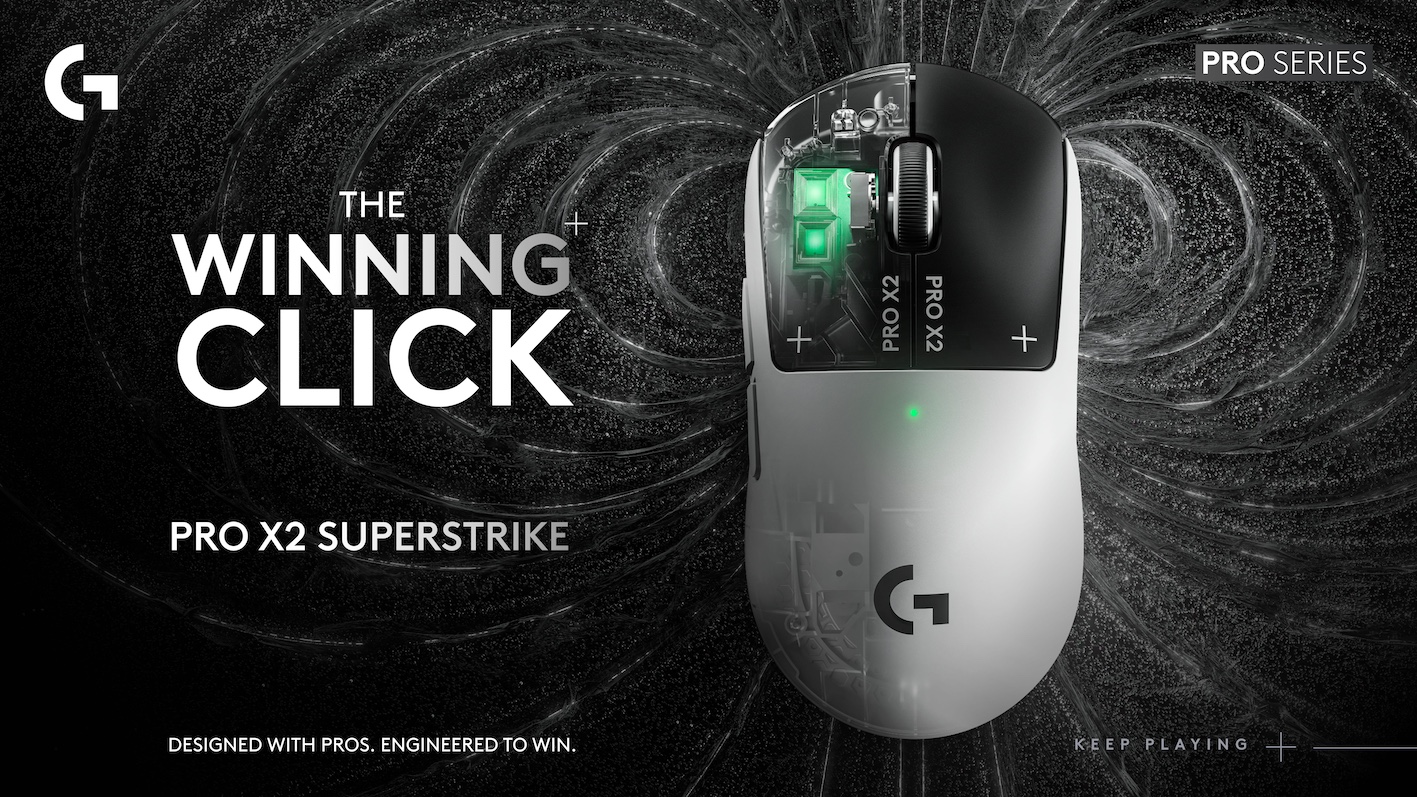
Quick Flicks and Pro Clicks: Logitech brings fastest click technology with Latest PRO X2 SUPERSTRIKE
1:11 p.m. March 26, 2026
Logitech G raises the bar for competitive gaming performance once again with the launch of the PRO X2 SUPERSTRIKE, a next-gen wireless mouse that combines inductive analog sensing with real-time haptics.
Designed for elite precision and total control, the PRO X2 dramatically reduces click latency, enhances responsiveness, and gives players the power to personalize their click intensity like never before.
Industry-Leading Click Technology
Featuring a patent-pending SUPERSTRIKE technology, an industry-first innovation, the PRO X2 transforms how every mouse click is activated and felt. This new technology allows players to reduce the required travel distance to send the click signal. Improvements in click delay are shown to reach up to 30 milliseconds based on internal testing. This drastically transforms the way players compete and provides them the decisive edge they need to win virtual battlefields.
The PRO X2 introduces the Haptic Inductive Trigger System (HITS), which replaces traditional microswitches found in gaming mice. This system drastically improves click latency performance by sending tactile feedback to players so each click is felt the moment the signal reaches the PC.
By combining trigger response optimization with real-time click haptics, Logitech G sets a new benchmark in competitive mouse performance through the PRO X2.
Customizable Esports-Level Gaming Performance
Developed in collaboration with elite esports teams G2 Esports, NAVi, and BLG, the PRO X2 is made to meet the demands of high-level competitive play. Every element of the mouse is designed to support players in fast decision-making, precise execution, and unmatched consistency, whether competing in a professional environment or grinding ranked matches at home.
Beyond its impressive click system, the PRO X2 also introduces 10 selectable actuation steps, allowing players to fine-tune the actuation point of both main buttons. This level of control enables them to calibrate every click depth to match their preferred playstyle, role, or specific game requirements with zero hassle. These adjustments can be made seamlessly through Logitech G HUB software, giving them the flexibility to edit their settings without disrupting their momentum.
The PRO X2 also features LIGHTSPEED wireless technology that blends comfort and efficiency by delivering up to an 8 kHz report rate of untethered freedom. This end-to-end wireless solution ensures that every click and movement registers with exceptional speed and stability, earning the trust of esports professionals worldwide.
Precision Tracking Without Setbacks
Harnessing Logitech’s elite HERO 2 sensor, the PRO X2 SUPERSTRIKE enables a reliable 888 IPS tracking speed with sub-micron precision, up to 44,000 DPI mouse sensitivity, and over 88G acceleration. For players, this level of control not only supports quick wrist flicks and controlled micro-adjustments but also helps in split-second decisions that require fast reaction. Movements are assured to have zero smoothing, acceleration, or filtering, giving players the chance to showcase their raw and unfiltered skills.
Lightweight Design Built for Long Competitive Sessions
Following the award-winning design of the SUPERLIGHT 2, the PRO X2 weighs 61 grams to support fluid movements and long competitive sessions. Additionally, it comes with a long-lasting battery, reaching up
90 hours of constant use, to allow players to focus on their games without worrying about charge times.
The PRO X2 SUPERSTRIKE sets a new benchmark in player-controlled click innovation that redefines what competitive gaming hardware can deliver. Through Logitech’s advancing technologies, it brings together ultra-responsiveness and absolute control for a reliable wireless virtual performance.
Logitech G’s latest gaming mouse is priced at PHP 11,945 and is available exclusively on Shopee and Logitech Authorized Retail Partners and Gaming Specialists. To learn more about the product and upcoming product releases, follow Logitech G on Facebook. You may also visit http://www.logitechg.com for more product offerings.
TECHNOLOGY
OPPO Find X9 breaks barriers of mobile photography

9:22 a.m. March 24, 2026
Redefining what a flagship smartphone camera can achieve, the OPPO Find X9 sets a new standard for mobile imaging with its innovative capability to capture full-resolution 50MP photos by default, delivering unprecedented clarity without relying on shooting modes or manual tweaks.
This breakthrough delivers unprecedented clarity and detail, with 8K-level resolution across all three rear lenses every time you press the shutter, marking the brand’s biggest leap in camera innovation yet. It is designed specifically for creators, visual storytellers, and photography enthusiasts in mind.
Delivering Professional- Grade Quality with the LUMO Image Engine
While most smartphones downscale images to 12MP due to processing limits, the OPPO Find X9 overcomes this barrier with an industry-first imaging pipeline powered by the LUMO Image Engine. All rear cameras now capture crisp, ultra-clear 50MP photos by default, preserving deep textures, sharp edges, and rich detail even after heavy cropping or zooming. To fully appreciate its exceptional quality, users can tap the 8K icon that appears when viewing their photos in the default Photos app for a level of clarity and resolution previously only associated with professional cameras.
Meanwhile, LUMO’s real-time parallel processing enables the CPU, GPU, ISP, and NPU to work simultaneously, enhancing clarity while cutting power consumption by up to 50 percent. This results in balanced highlights, clean shadows, and impressive detail retention even in complex lighting conditions.
Refining Creative Expression Through the Hasselblad Master Camera System
At the core of the OPPO Find X9’s imaging capabilities is the Hasselblad Master Camera System, which brings professional-grade engineering to smartphone photography. The system includes:
- 50MP Main Camera with an ultra-large sensor for enhanced light intake
- 50MP Ultra-Wide Camera capable of capturing sweeping landscapes with zero distortion
- 50MP Periscope Telephoto Camera featuring OPPO’s Triple Prism Lens and 120x Super Zoom for astounding long-range shot results
The collaboration with Hasselblad ensures natural color calibration, beautifully rendered portraits, and deeper tones that reflect the iconic look of Hasselblad cameras. Features like Hasselblad XPAN Mode, Master Mode, and enhanced bokeh simulation provide depth and artistic control for creators.
Revealing True-to-Life Color Through Advanced Spectral Sensing
OPPO Find X9’s True Color Camera supports the 50MP default mode. It is an innovative sensor equipped with two million spectral pixels that analyze color temperature across a refined grid. This ensures that skin tones, neon signs, sunsets, and indoor lighting appear as close as possible to how the eye sees them, providing accuracy that is difficult to achieve on typical mobile cameras.
Colors are rendered naturally, without overly saturated processing, creating images that stand out in their authenticity and tonal balance.
Empowering New Perspectives With 120x Super Zoom
The OPPO Find X9 delivers dependable detail even at extreme distances through its 120x Super Zoom. Using a combination of optical zoom, sensor-level processing, and OPPO’s Super Resolution algorithm, the phone allows users to capture subjects far across the city skyline or fine details across a concert venue. Images remain clear and stable, unlocking creative perspectives normally accessible only with professional telephoto lenses.
A Fusion of Artistry and Engineering
The OPPO Find X9 embodies a design philosophy that brings together art, precision, and intelligent engineering. Its camera innovations are paired with a powerful performance core, ideal for Filipinos who rely on their smartphones to capture their stories.
The OPPO Find X9 (16GB + 512GB) is available nationwide through OPPO’s physical stores, e-commerce platforms on Shopee, Lazada, TikTok, and the official OPPO online store.
TECHNOLOGY
Designed for style: HONOR X8d arrives in PH for only P15,999

3:00 p.m. March 22, 2026
LEADING global AI smart devices provider HONOR Philippines today lifted the curtain on the new HONOR X8d, the latest addition to its acclaimed X Series line-up. Crafted to deliver an optimal experience to users, the HONOR X8d is priced at P15,999.
The new stylish smartphone integrates ultra-slim design, a robust 7000mAh battery, and stunning AI experience, representing HONOR’s dedication to provide well-rounded smartphones cater to the needs of consumers who desire a sleek, intelligent, and durable mobile device.
“The HONOR X8d is designed for today’s generation—where style is a statement and value matters. We’re proud to offer a smartphone that delivers both, making premium aesthetics and reliable performance more accessible than ever,” said HONOR Philippines Vice President Stephen Cheng.
Ultra-Slim Design with Class-Leading Battery Life
Introducing a 7.5mm ultra-thin and lightweight design, the HONOR X8d strikes a perfect balance between a smooth feel and elegant appearance. With advanced excimer technology and micro-nano textures, the body is extremely glossy and eye-catching, while the exquisite metal barrel adds extra embellishment to the back cover.
Powered by a large 7000mAh battery, the HONOR X8d provides price-level biggest 52 hours battery life verified by TÜV Rheinland and 6 years of endurance. The test data shows that the device can stand up to 31 hours of video playback on a single charge. With multi-point temperature monitoring, the battery shows great performance in temperatures from -20°C to 45°C, which allows it to work perfectly in various harsh condition. Additionally, the 45W wired HONOR SuperCharge can rapidly revive the battery for extended usage.
Fabulous AI Button for Brand-New AI Experience
Featuring a brilliant Instant AI Button, the HONOR X8d offers brand-new AI interaction through this subtle design. This physical side button enables users to quickly launch clean up and speed up commands and frequently used apps with a single press, providing much convenience in daily lives. Meanwhile, with a long press, users can activate more AI features such as Circle-to-Search, AI Subtitles, AI Writing, and Blur Private Info, delivering personalized and seamless user experience. Powered by the latest MagicOS 10 based on Android 16, the HONOR X8d carries various other intelligence features including Magic Capsule, Magic Portal, AI Memories, AI Settings Agent, and Google Gemini Assistant, making it the best partner for both work and life.
Exceptional Durability with Comprehensive Protection
Despite its extremely slim and lightweight body design, the HONOR X8d still showcases all-around drop resistance with SGS Premium Performance Certification of Drop & Crush Resistance, which ensures it can withstand drops from heights of up to 2 meters. Boasted with IP65 Water Resistance, the HONOR X8d can easily handle complex water environments including rinsing, splashing, and even high-pressure water guns. This device has been tested to function after being submerged in water for up to 1 minute at a depth of 0.5 meters, making it a dependable companion in various settings and situations. Additionally, with Wet-Hand Touch Enhancement, users can still have smooth experience even with wet or greasy fingers.
AI-Powered Smartphone Photography Experience
Packed with a stunning 108MP Ultra-Clear AI Camera, the HONOR X8d captures images with exceptional details and enhanced brightness, offering users both daylight precision and nocturnal refinement. With 3x Lossless Zoom, users can create stunning shots with diverse focal lengths, effortlessly creating different street vibes. With HONOR Connection, the HONOR X8d breaks the long-standing “drop-barrier” between different systems, enabling the device to share moving photo to iOS seamlessly. Additionally, the HONOR X8d integrates AI photography features like AI Eraser, AI Upscale, AI Cutout and AI Outpainting, which enable users to freely customize their image, streamlining photo editing on smartphones.
Enhanced Hardware for Superior Experience
The HONOR X8d features a 6.77-inch OLED Display, which supports 1.07 billion colors, a high refresh rate of 120Hz, and peak HDR brightness of 3000nits, delivering vibrant hues and incredibly fluid interface with exceptionally sharp and clear viewing experience. The device also boasts 6 eye-care technologies, including 3840Hz PWM Risk-free Dimming, Circadian Night Display, Dynamic Dimming, Comfortable Dim-light Adjustment, Low Blue Light and E-Book Mode.
Powered by the Snapdragon 6s 4G Gen 2, the HONOR X8d offers users a new level of system smoothness and higher graphical performance. This power efficiency is complemented by HONOR’s innovative RAM Turbo Technology, which effectively provides a 16GB RAM equivalent experience (8GB physical + 8GB virtual). It ensures smooth performance even after extended use, allowing users to multitask and switch between apps effortlessly. Additionally, the HONOR X8d comes equipped with 512GB large internal storage at most, providing ample space for years of precious memories.
Pricing and Availability
Catering to users’ diverse style preferences, the HONOR X8d is available in 3 captivating colorways: Light Blue, Velvet Black, Velvet Grey. Starting March 19 to 27, 2026, the HONOR X8d will be available for pre-order for only P15,999 with FREE HONOR Camping Light Speakers when you get from any HONOR Experience and Partner Stores. HONOR X8d is also available online via Shopee (https://bit.ly/Shop_X8d_PR), Lazada (https://bit.ly/Laz_X8d_PR), and TikTok Shop (https://bit.ly/TikTok_X8d_PR) with FREE HONOR Earbuds II.
Check out full specs of HONOR X8d here (https://bit.ly/Web_X8d_PR). In the meantime, for more exciting announcements, visit HONOR’s website www.hihonor.com, and follow HONOR Philippines on Facebook (Facebook.com/HonorPhilippines), Instagram (Instagram.com/honorph/) and TikTok: (Tiktok.com/@honorphilippines) for exclusive teasers, launch updates, and big reveal.


DigiPlus levels up user engagement with ArenaPlus’ P1B Prediction Giveaway

COA named WTO External Auditor, begins six-year term

What happened in Calvary 2000 years ago