
COUNT
Huawei reports profits, new highs in R&D
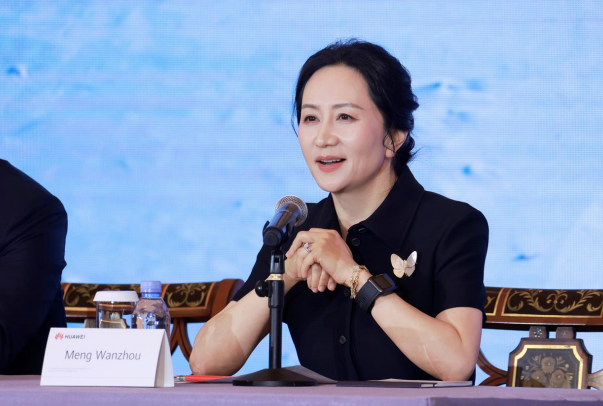
Huawei CFO Meng Wanzhou
March 29, 2022 4:29 p.m.
SHENZHEN, China — Huawei announced during its 2021 Annual Report on March 28 that it achieved CNY636.8 billion in revenue in 2021 and CNY113.7 billion in net profits, an increase of 75.9% year-on-year. The company said overall, the performance was in line with its forecast.
“Despite a revenue decline in 2021, our ability to make a profit and generate cash flows is increasing and we are more capable of dealing with uncertainty,” Meng Wanzhou, Huawei CFO said.
Due to the enhanced profitability of its major businesses, the company’s cash flow from operating activities dramatically increased in 2021, amounting to CNY59.7 billion.
For business groups, in 2021, Huawei’s carrier business generated CNY281.5 billion in revenue.
Third-party test results have found that 5G networks built by Huawei for customers in 13 countries, including Switzerland, Germany, Finland, the Netherlands, South Korea, and Saudi Arabia, provided the best user experience.Huawei’s enterprise business generated CNY102.4 billion in revenue during 2021.
Huawei launched 11 scenario-based solutions for key sectors such as government, transportation, finance, energy and manufacturing.
The company also established multiple dedicated teams, including a Coal Mine Team, a Smart Road Team, and a Customs and Port Team, to combine resources in a way that more efficiently serves the needs of its customers.
Over 700 cities and 267 Fortune Global 500 companies have chosen Huawei as their digital transformation partner.
Huawei now works with more than 6,000 service and operation partners around the world.Huawei’s consumer business generated CNY243.4 billion in revenue in 2021 and continued to see steady sales growth in smart wearables, smart screens, true wireless stereo (TWS) earbuds.
Huawei Rotating Chairman Guo Ping said solving the chip problem is a complicated and long process that requires patience. In the future, chip solution may adopt a multi-core structure to improve chip performance.
Under pressure, with the company’s R&D expenditure hitting a new high, reached CNY142.7 billion in 2021, representing 22.4% of its total revenue.
This ranked no. 2 of the EU industrial R&D investment scoreboard as 54.8% of Huawei staff worked in R&D. As released on March 28, its total R&D expenditure over the past 10 years amounted to over CNY845 billion, with Huawei saying will continue to invest heavily in research and innovation.
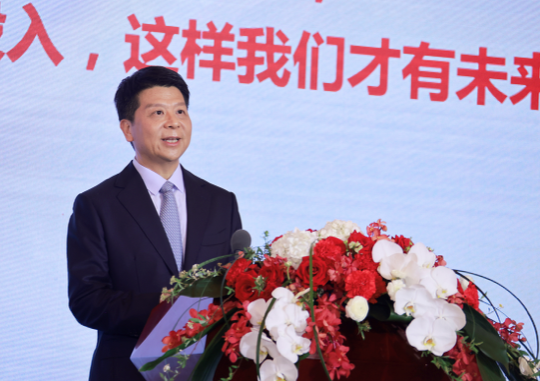
Ping said at the event that Huawei’s ability to “survive and thrive” depends on ongoing investment in development.
“Our fight to survive is not over yet,” Guo said. “No matter what comes our way, we will keep investing. That is the only way forward.”
Jun Zhang, Director of Huawei Asia-Pacific Public Relations Department, said during an interview with the Philippine media, that although US restrictions have had a huge impact on Huawei, its main business in ICT infrastructure has remained stable, while new business segments like digital power and cloud grew rapidly and its ecosystem development efforts have entered the fast lane.
In the context of accelerating digital transformation, there are strong market demands for innovative digital solutions and high-quality suppliers.
The Asia Pacific, including the Philippines, is ripe with opportunities for digital transformation, and the pandemic has accelerated it. As 5G rolls out at full scale, connectivity, cloud, AI, computing, and industry applications have all come together to create unprecedented opportunities for the ICT sector.
Huawei will keep driving digital innovation for an inclusive Asia Pacific and leave no one behind.
For Huawei, investment not only went to R&D, but also cultivating ICT Talents.Seeds for the Future, Huawei’s global CSR flagship program launched in 2008, seeks to develop local ICT talent, enhance knowledge transfer, help participants better understand the ICT sector, stimulate their interest in it and promote and encourage participation in building a digital community.
Daniel Guo, COO of Huawei Philippines, said Seeds for the Future has been in the Philippines for seven years, with more than 200 students joining the program and some even becoming Huawei staffers after graduating from universities.
The program used to take two weeks in China and moved online during COVID. This year, the program might go hybrid.
Huawei ICT Academy, another non-profit program globally, serves as a bridge between companies and colleges, helping to build a talent ecosystem for the ICT industry.
Huawei partnered with 60 Philippine universities and established ICT academies, with over 9,000 students joining the program. By the end of 2021, Huawei had presented over 550,000 certifications worldwide, including over 17,000 Huawei Certified ICT Expert certifications.
Last year, Huawei also launched its HCIE 100 project in the country, engineers who passed the certifications will be a valuable resource for industry digitalization world.
In the Philippines, Huawei also worked together with five of the top universities for the Huawei Scholarship program, which aims to provide financial assistance to deserving students who are already in their 3rd to 5th year in college.
Huawei has sponsored 22 scholars as of now.










COUNT
DigiPlus levels up user engagement with ArenaPlus’ P1B Prediction Giveaway

5:10 p.m. April 7, 2026
DigiPlus Interactive Corp., the country’s pioneer and leader in digital entertainment, through its flagship sportsbook platform ArenaPlus, formally launched its P1 Billion Prediction Giveaway last Saturday, March 21, heralding a major step-up in its customer acquisition and retention strategy.
This initiative is anchored by a high-stakes prediction challenge designed to invite new users onto ArenaPlus, while also deepening player participation and reinforcing brand leadership in the Philippine online sportsbook space. Central to this campaign is the introduction of a localized tournament bracket game—a staple in American sports culture that ArenaPlus is pioneering for the local market.
“We want to bring some excitement for the Filipino basketball fans, especially since we know that the NBA is the most popular sport here. The bracket game is actually very common in the US. It’s been running there constantly for years, but the Philippines has never had that experience. We want to bring that here,” said ArenaPlus Head Erick Su.
By offering the ₱1 Billion Prediction Giveaway as a free-to-play initiative, DigiPlus enables fans to engage in the tournament without any monetary commitment. Su emphasized that the campaign is designed to provide a safe, entertainment-led experience, with the bracket format sustaining interest from the opening round of the Playoffs through the Finals, where one team ultimately prevails.
“I think the excitement will be from beginning to the end. Because the bracket game covers the whole stage of the Playoffs, fans can expand their predictions and go along with the whole process and expect that they can win,” Su said. “So that’s going to bring a lot of excitement. And this is completely free and very safe as we want to entertain Filipinos.”
Amplifying the campaign that launched at Mall of Asia Sky Deck Amphitheater in Pasay City was premier host and actor Luis “Lucky” Manzano, who was also introduced as ArenaPlus’ latest brand ambassador. Joining Manzano were fellow endorsers Gilas Pilipinas naturalized player Justin Brownlee, multi-time champion assistant coach Bong Ravena, and his son, international pro Thirdy, who are effectively raising ArenaPlus’ visibility while also broadening the brand’s demographic reach.
“At ArenaPlus, we are relentless with our commitment to elevate our players’ experience, making sports more fulfilling, more immersive, and more rewarding for every Filipino,” said ArenaPlus Marketing Head Hannah Bagui as ArenaPlus continues to differentiate itself by pioneering accessible digital sports entertainment.
While the campaign is designed to drive wide participation, ArenaPlus emphasized that it intends to maintain strict platform integrity through its rigorous eKYC (electronic Know Your Customer) process. Such a guardrail bolsters an already rich suite of responsible gaming tools built into ArenaPlus, such as options to set daily gaming durations, customize specific gaming schedules, and establish daily loss limits. This ensures that while the campaign achieves great reach, it does so within a secure, transparent, and compliant environment that builds trust.
Through these strategic customer activations and continuous platform innovation, DigiPlus Interactive Corp. continues to solidify its legacy as the definitive pioneer of the Philippine digital entertainment industry, driving growth while also redefining user engagement
COUNT
What happened in Calvary 2000 years ago
11:39 a.m. April 5, 2026
BY NAZARENE A. LEYCO
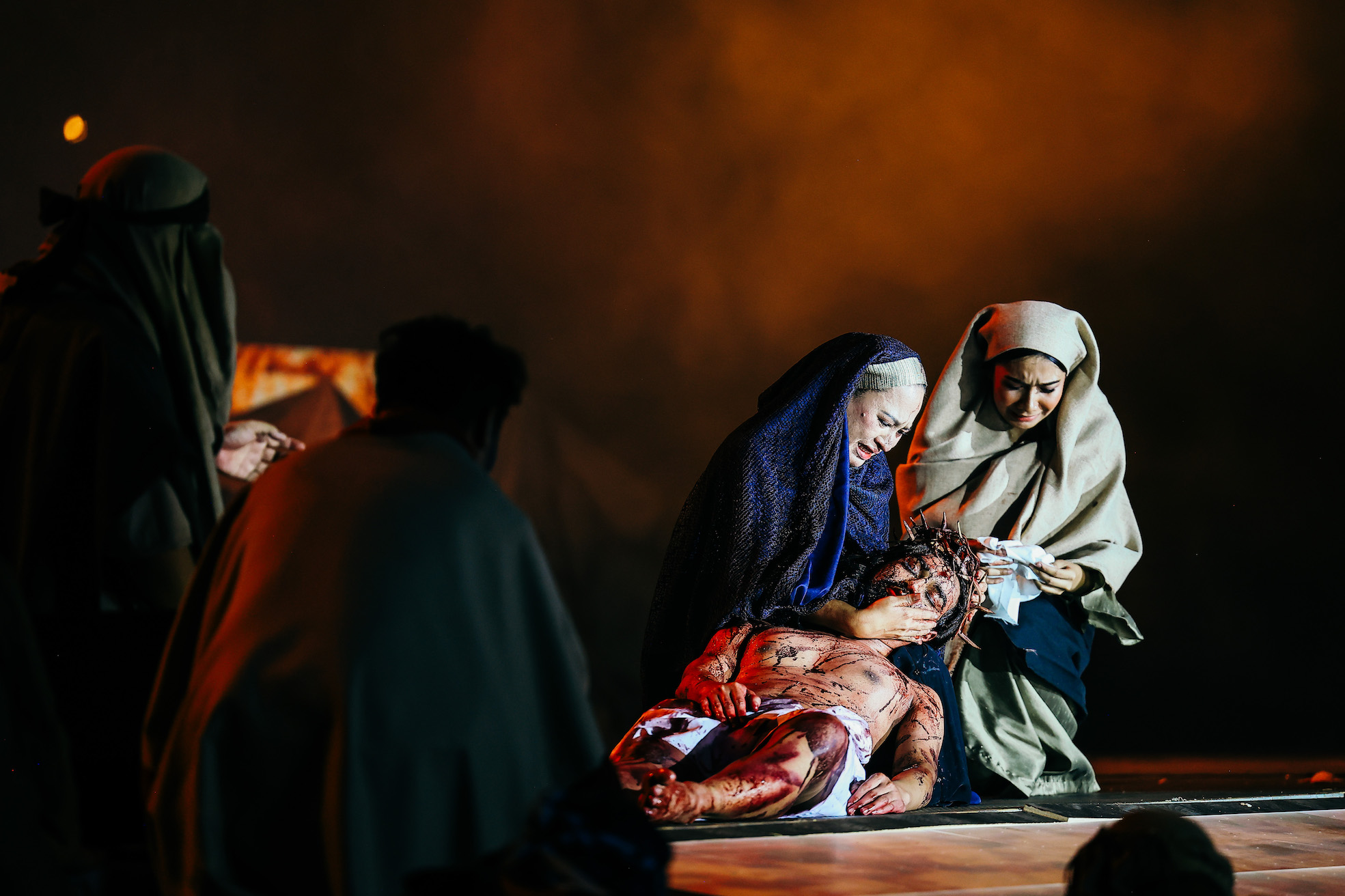
In the heavy silence of Good Friday, April 3, the ordinary, familiar rhythms of Marikina fell silent before a higher calling. The ordinary gave way to the transcendent, as the city gathered for lenten Friday tradition, the two-thousand-year distance between Calvary and the present dissolved, transfiguring the stadium into a consecrated ground where the sacred drama was not merely remembered, but relived.
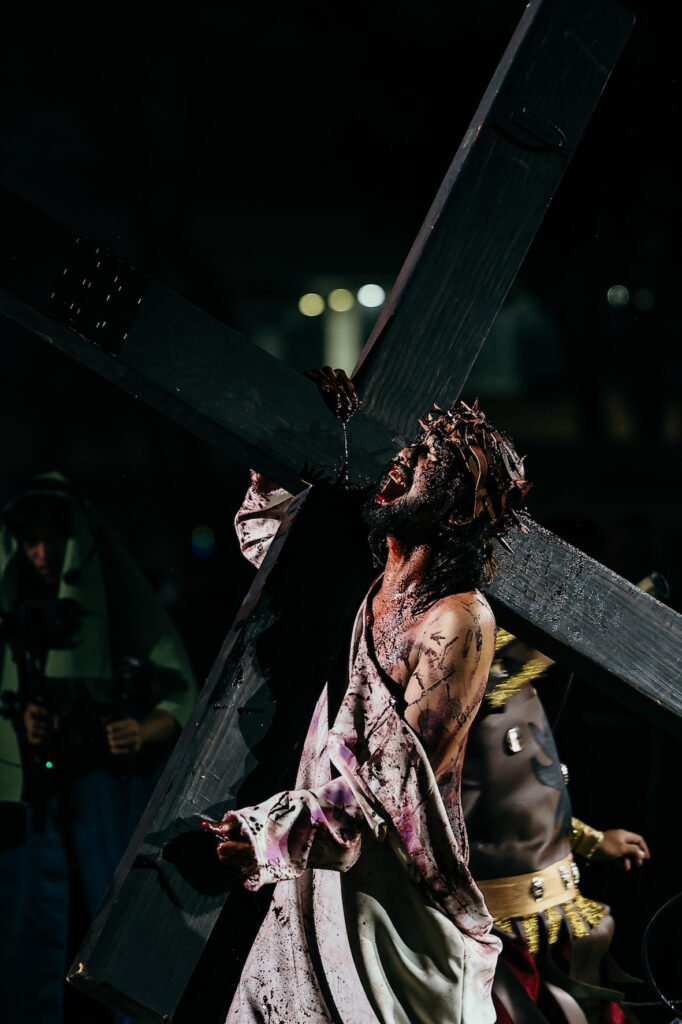
The evening was illuminated by “JESUS: A Grand Senakulo Musical Play,” a masterful rendition of the life, sacrifice, and triumph of our Lord Jesus Christ. This artistic endeavor transcended mere performance, becoming a living tapestry that wove together the dramatic narratives of faith, suffering, and redemption. As the story unfolded on stage, the audience was transported back 2,000 years, witnessing anew the pivotal moments that forever altered the course of human history.
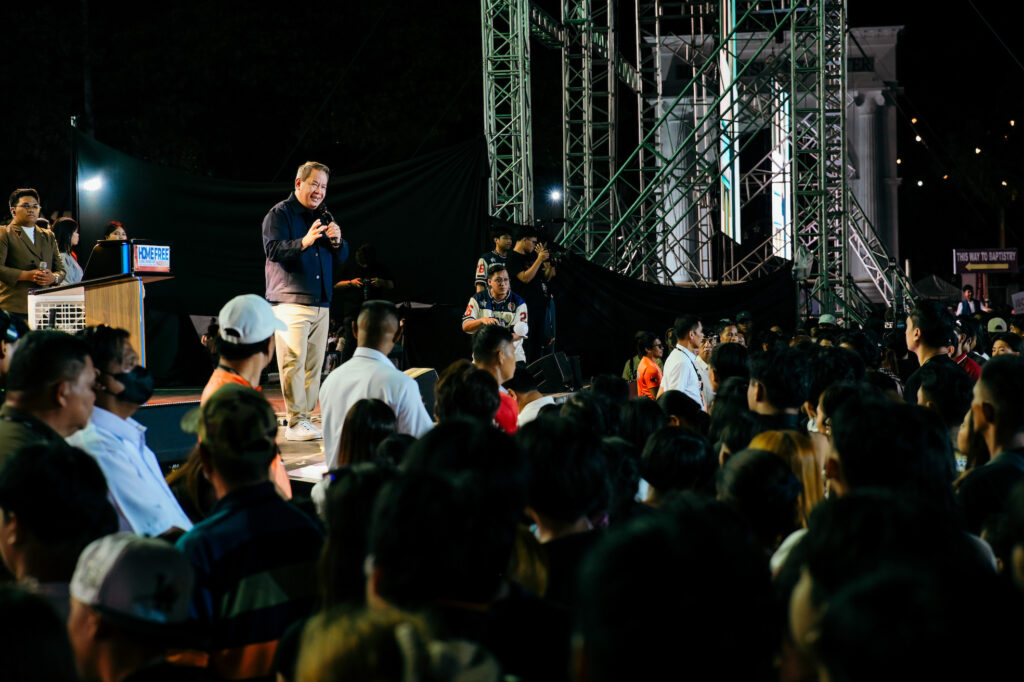
Following this poignant portrayal, Global Evangelist Jonathan S. Ferriol stepped forward to deliver a sermon titled “What Happened at Calvary.” With profound eloquence and spiritual conviction, he unpacked the timeless truths encapsulated in that singular event. His words resonated deeply within the vast congregation, reminding all present of the immutable promise held within the Cross, a message that has echoed through millennia, steadfast and unchanging, offering.

“We are all dying in our sins before Christ came into our lives and delivered us from eternal damnation. No good works can save us all, otherwise, Jesus would not have come down from heaven to rescue us all,” the apostle enthused.
He also underscored that the message of the Cross remains unchanged from two millennia ago to this very day, a message of hope that pierces the darkest valleys, of forgiveness that wipes the slate clean, of freedom that breaks the weight of sin, of love revealed in a sacrifice beyond measure, and of triumph that conquers death and ushers in eternal life.
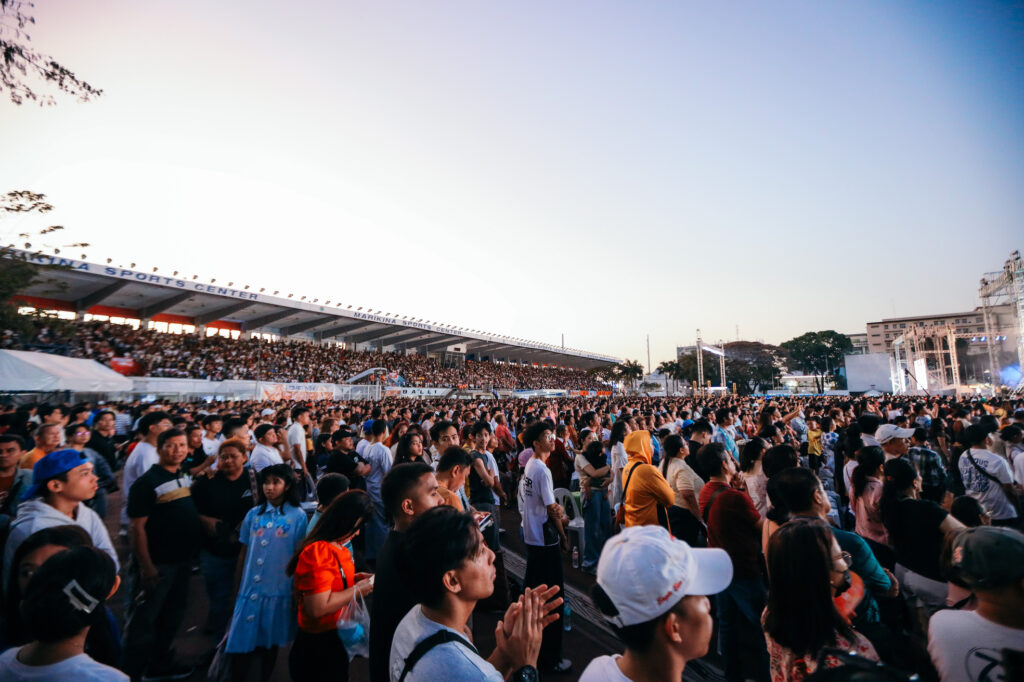
In a stirring response to this unwavering message, thousands rose from their seats, their hearts open and ready to embrace Christ as their Lord and Savior. In a magnificent display of faith and commitment, they immediately proceeded to receive water baptism, symbolizing their new beginning and profound connection to the divine.
This sacred assembly at the Marikina Sports Center was more than just a gathering; it was a powerful reaffirmation of the Cross’s timeless relevance in an ever-changing world. It underscored that while modalities evolve, the core tenets of freedom, hope, forgiveness, love, and triumph remain the eternal anchors of humanity’s spiritual quest. Each soul touched that evening became a living testament to a message that, two millennia later, continues to transform lives and inspire multitudes, proving that the essence of Calvary’s sacrifice is as potent and transformative today as it was in the beginning.

In a time marked by unrest, uncertainty, and the quiet exhaustion of a world searching for answers in all the wrong places, the significance of that night becomes even more pronounced.
What unfolded was not a retreat into tradition, but a confrontation with a truth that refuses to age or lose its claim on the human soul. The same fractures that defined humanity centuries ago. sin, despair, brokenness, persist today, only clothed in more modern forms, and no advancement has yet resolved them. This is why the need for Christ is neither outdated nor optional, but enduring and absolute.
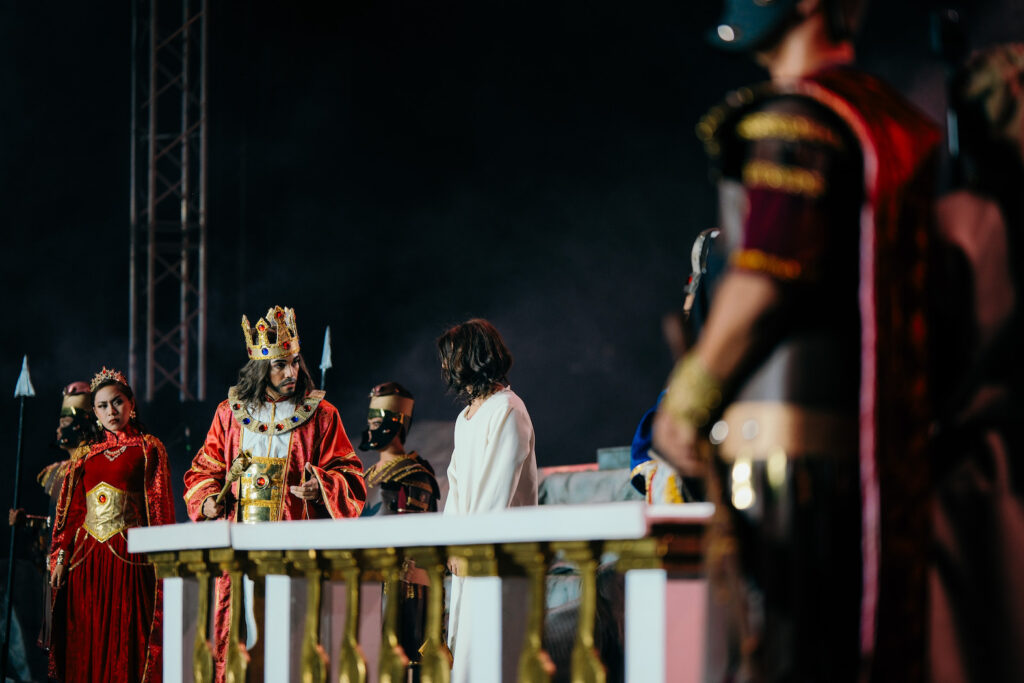
The Cross does not merely belong to history; it speaks with urgency into the present, meeting the deepest needs of every generation. And in that gathering, it became unmistakably clear: as long as humanity wrestles with darkness, there will remain an unending, unrelenting need for the light that only Christ can give.
Capping the second leg of the HFGC with a resonant message of hope and love, the PMCC gathered at daybreak to celebrate God’s absolute victory over death, where the silence of the tomb was finally shattered by the joy of the risen Christ.

COUNT
Isambard-AI, the UK’s most powerful AI supercomputer, goes live
6:39 p.m. July 18, 2025
(NVIDIA PR) The U.K. has officially joined the premier league of global AI infrastructure — and it’s not starting small.
At a ribbon-cutting ceremony at the Bristol Centre for Supercomputing (BriCS), leaders today unveiled Isambard-AI, the most powerful AI supercomputer ever built in the U.K.
U.K. Secretary of State Peter Kyle was joined by leaders from across academia, industry and government, including Simon McIntosh-Smith, director of the Bristol Centre for Supercomputing, and Neil MacDonald, executive vice president and general manager for Hewlett Packard Enterprise’s server business.
“And as we press this switch to activate the UK’s most powerful supercomputer, we are embarking on Britain’s super future where AI contributes towards the delivery of better public services, greater public prosperity, deeper scientific discovery and stronger national security,” Kyle said.
The numbers back up Kyle’s statement:
- 21 exaflops of AI performance
- 5,448 NVIDIA GH200 Grace Hopper Superchips
- Set to rank 11th worldwide on the latest TOP500 list of world’s fastest supercomputers
- More than 10x faster than the next-fastest supercomputer in the U.K. More computing power than all other U.K. supercomputers combined
- Ranked fourth globally for energy efficiency
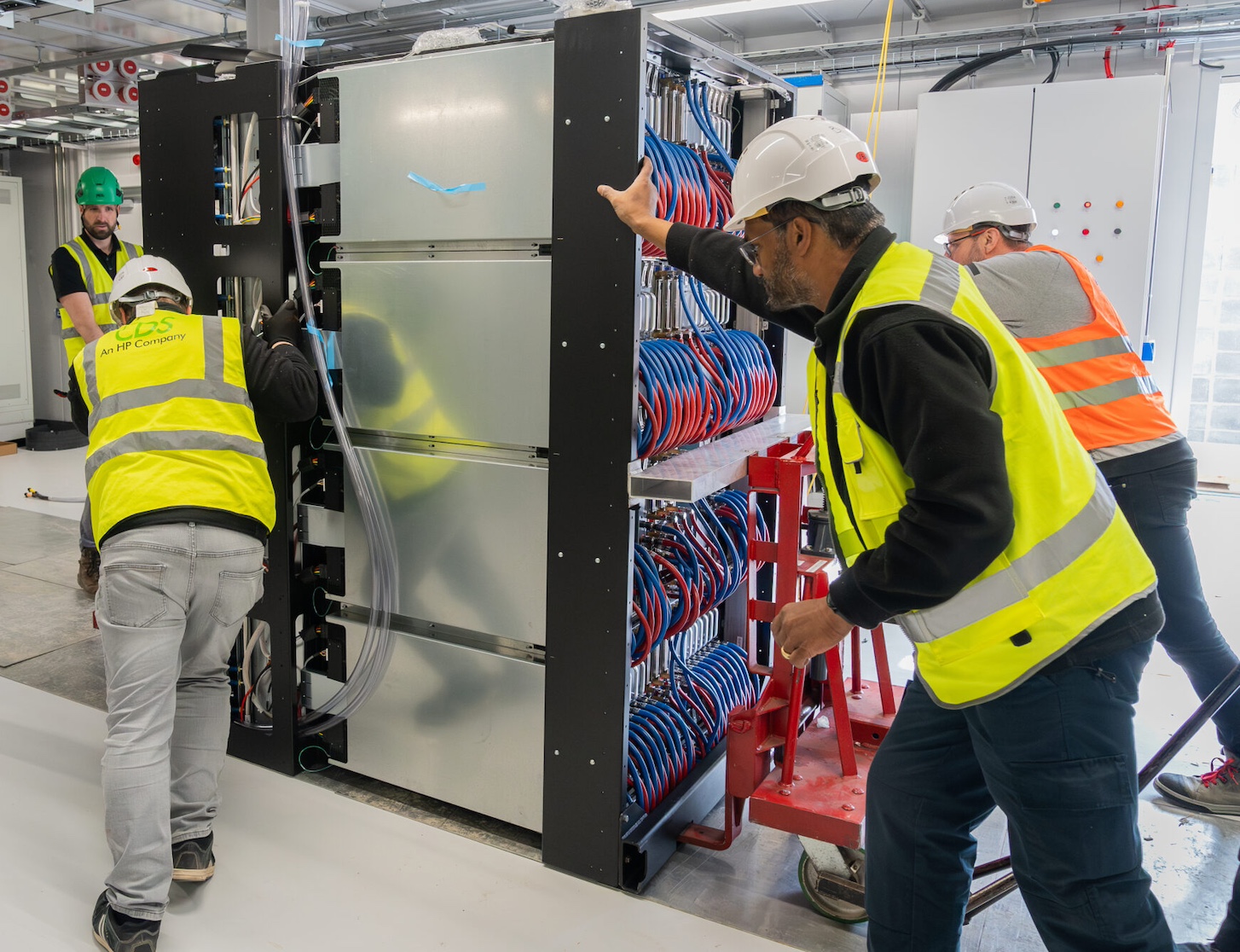
Engineering teams working collaboratively to maneuver and install components within the supercomputer’s data hall, illustrating the complex and coordinated effort behind the build.
Why It Matters
Isambard-AI gives U.K. researchers and businesses a once-in-a-generation leap in computing power. It’s a platform to accelerate breakthroughs in:
- AI-driven drug discovery
- Advanced climate modeling
- Materials science
- Large language models (LLMs) tuned to U.K. languages and laws
Backed by £225 million in government investment and built with NVIDIA, HPE, the University of Bristol and others, Isambard-AI signals a clear ambition: to lead in AI, the U.K. must lead in compute.
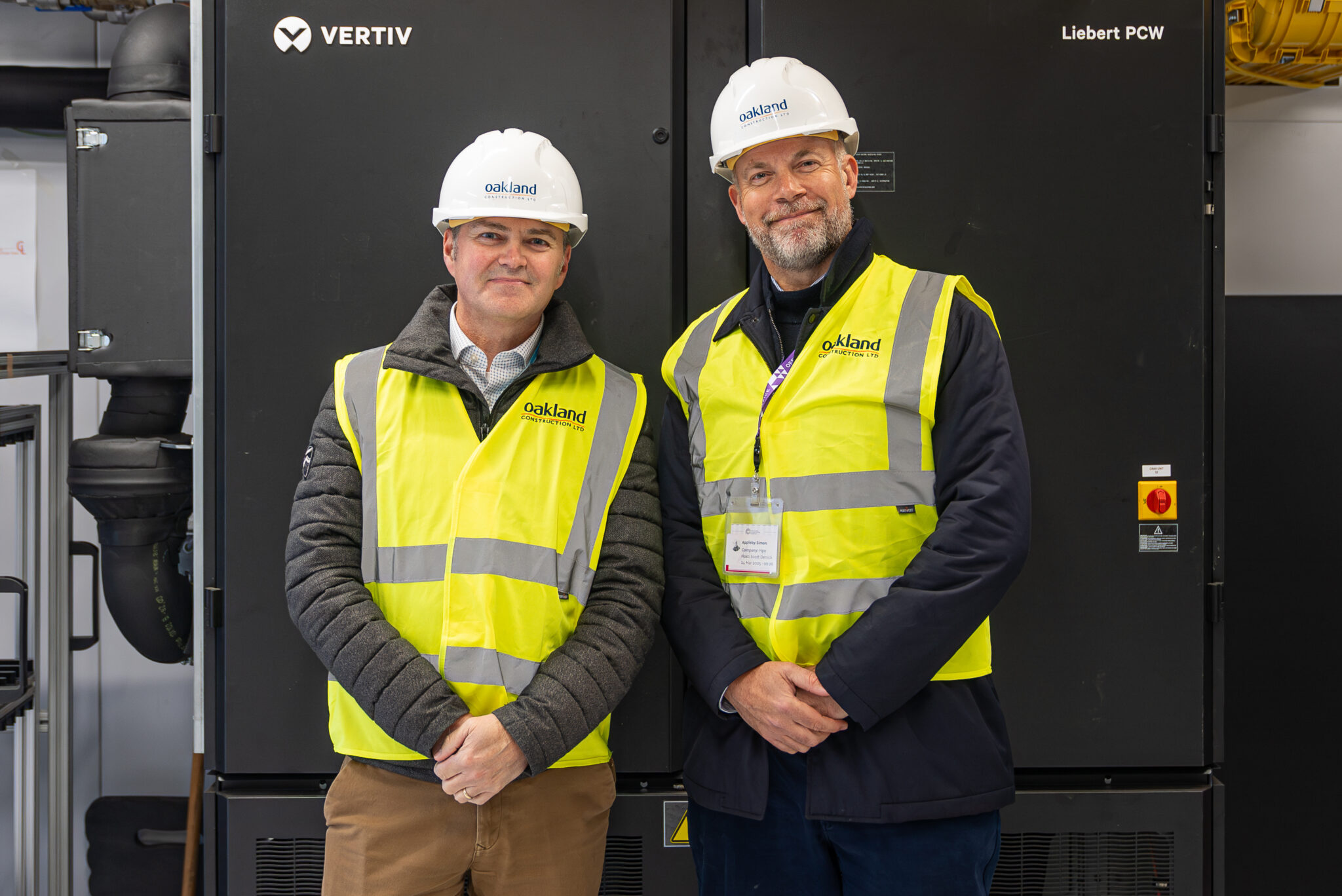 Simon McIntosh-Smith, director of the Bristol Centre for Supercomputing, with Simon Appleby, AI business lead at HPE.
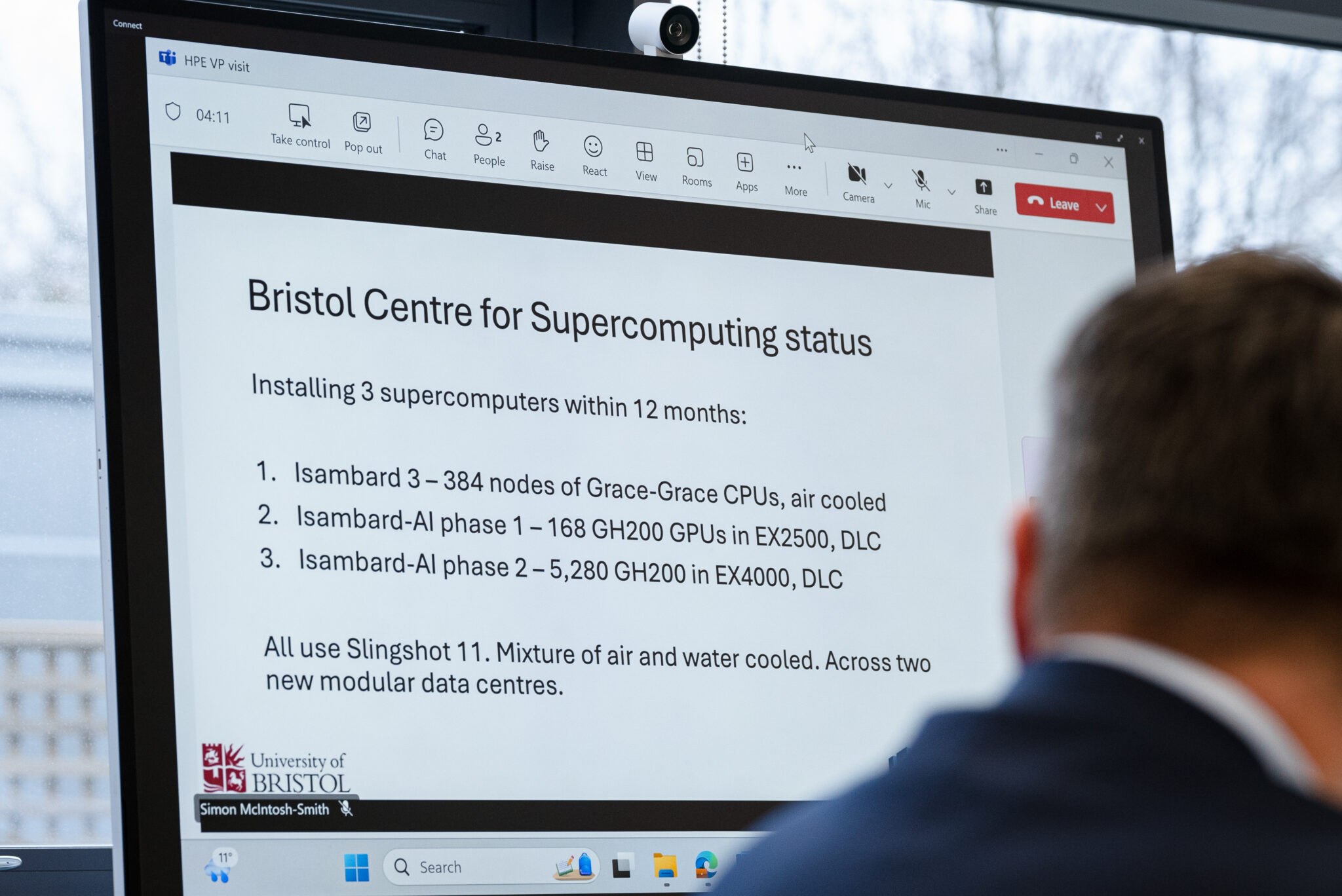 A glimpse into the project’s strategic planning, showing a screen outlining the ambitious goal of installing multiple supercomputers, including Isambard-AI’s phases, within 12 months.
A Turning Point for UK Science
Named after Isambard Kingdom Brunel — the 19th-century engineer who reshaped Britain with railways, bridges and ships — Isambard-AI brings that same scale of ambition to AI research.
And like Brunel’s projects during his era, it moves fast. Having gone from conception to deployment in just under two years, including the construction of the modular data center in 48 hours, the supercomputer is already running live projects aligned with national priorities.
Early flagship projects include:
- Nightingale AI: A sovereign, multimodal health foundation model trained on National Health Service (NHS) data to support earlier diagnoses and personalized care.
- BritLLM: A U.K.-developed LLM project supporting British languages like Welsh, alongside English, to promote inclusivity and better public service delivery in healthcare, education and public services.
- UCL Cancer Screening AI: Developing the first scalable AI system for prostate cancer detection via MRI, aiming for faster diagnoses and tailored treatments.
- EIMCRYSTAL (University of Liverpool): Using AI to search 68 million chemical combinations to discover greener, more sustainable industrial materials — reducing reliance on rare or toxic inputs.
- EgoAI (University of Bristol): Using AI to analyze recordings from wearable cameras and other smart devices to help people perform tasks better at home. This holds immense promise for assisting dementia patients in the future.
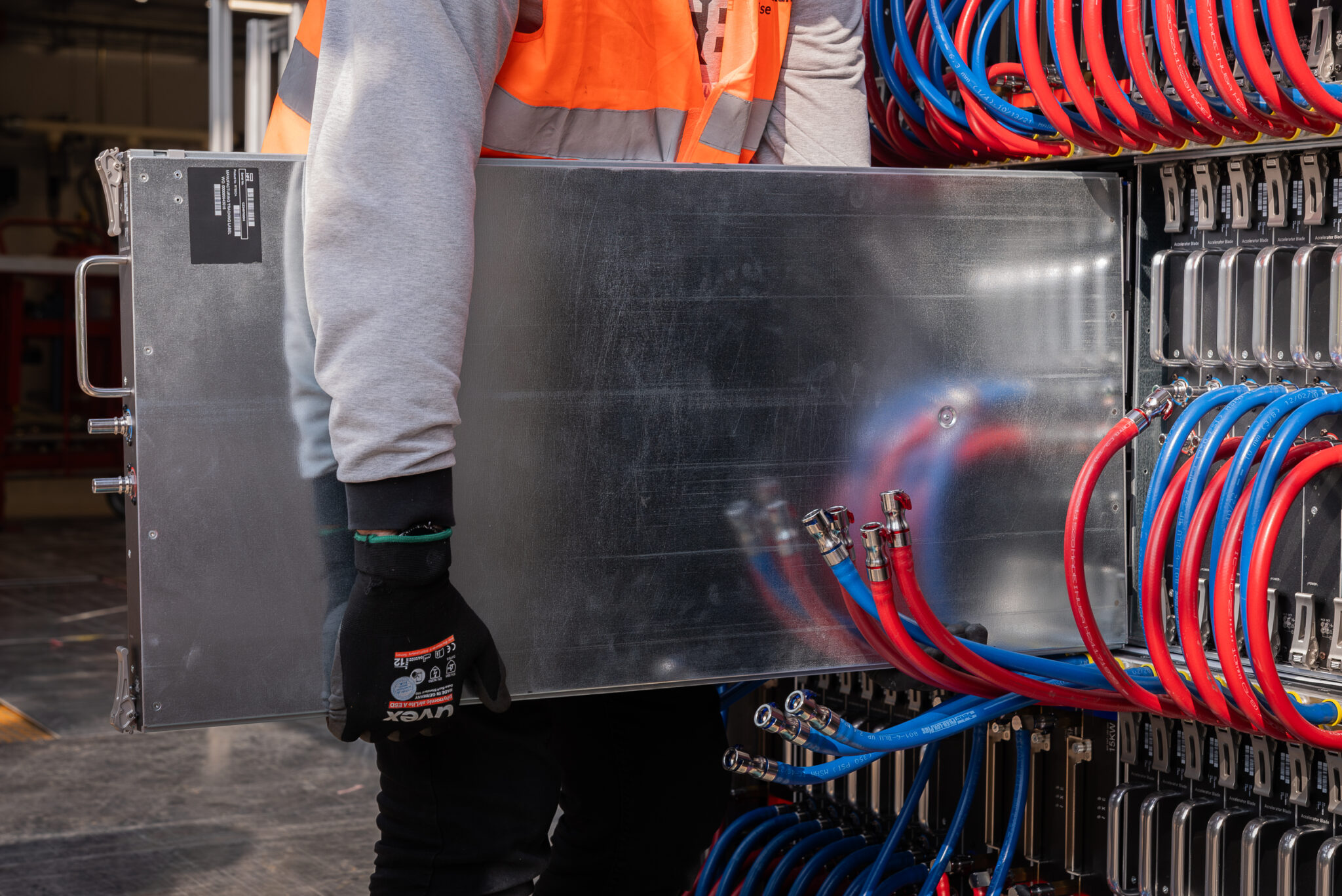
A technician carefully installs a server blade equipped with direct liquid cooling, demonstrating the hands-on precision involved in assembling Isambard-AI’s advanced computing infrastructure.
Built Fast, Built Smart
How do you build a supercomputer in half the usual time?
“We treated the project like a high-performance processor,” said Simon McIntosh-Smith, director at BriCS. “We executed everything in parallel.”
Key to this speed:
- Parallelized project management
- Early procurement of critical hardware, particularly GPUs
- Prefabricated modular data halls shipped in and assembled in days
- Relentless optimization of delivery timelines
- Ground broke in June 2024. By June 2025, the full 5-megawatt system was live: built, tested and running at a global scale.


DigiPlus levels up user engagement with ArenaPlus’ P1B Prediction Giveaway

COA named WTO External Auditor, begins six-year term

What happened in Calvary 2000 years ago