Miller seeks redemption at Winter Olympics

February 15, 2022 5:19 p.m.
YANQING, China—Asa Miller gets a shot at redemption on Wednesday in the highly unpredictable men’s slalom of the Beijing 2022 Winter Olympics.
After taking a day’s off on Monday to shake off frustration from his mishap in the giant slalom on Sunday, Miller took to the course on Tuesday not only to get his legs and arms get the feel of the course again, but reset his focus as well.
“Trust your feet and trust yourself as the skier you are,” American coach Will Gregorak told his 21-year-old and two-time Olympian ward in between training runs at the National Alpine Skiing Centre. “It’s similar to what I told you before—the best you can possibly ski on race day is to ski like yourself.”
The start list won’t be known until during the coaches’ meeting set later Tuesday, but definitely, Miller will be up against world-class opponents seeking Olympic glory—including the man they call “The Rocket,” Dave Ryding.Most eyes are on Ryding, whose tough task is to end Great Britain’s lengthy wait for a first Olympic medal in Alpine skiing. Alain Baxter won Britain’s first Olympic medal in Alpine skiing, but was stripped of his slalom bronze at the 2002 Salt Lake City Games for using a decongestant that contained a banned stimulant.
Ryding, now 35, is in his fourth Olympics.
Gregorak was aggressive in helping Miller put his mind on the course.
“You’re not going to become another person and you are already an excellent skier,” the 31-year-old coach told the Filipino-American athlete. “All you have to do is find the feeling that you already know.”
Gregorak added: “When you get into the gate, it’s just you and the course. Go and have some fun by making your best turn.”
Just how unpredictable was Alpine skiing this season? There were six World Cup slaloms with six different winners with only four skiers making the podium more than once and no one doing it more than twice.
Miller was one of 33 skiers—out of 84 starters—who were DNF (Did Not Finish) in the giant slalom on Sunday when natural snow fell incessantly for the first time in the Games during the weekend and rendered visibility poor at the Ice River course.
Besides Ryding, the other favorites include World Cup veteran Lucas Braathen of Norway, 2017 world champion Manuel Ferrer of Austria, 2018 world junior champion Noel Clement of France, and Pyeongchang 2018 Olympics team event gold medalist Daniel Yule of Great Britain.Miller, whose Olympic campaign is fully supported by the Philippine Sports Commission, concentrated on his training and only smiled or waved his hand when sought for an interview.Gregorak, meanwhile, said that the slalom “hill is a little bit an easier place than giant slalom” so he is expecting more racers to finish.
“It’s an easier slalom hill than GS [giant slalom] where the upper and lower pitches were very difficult,” said Gregorak, who owns 23 World Cup stints while playing for the US team from 2008 to 2014. “This is exactly a mellow slalom, not a particularly difficult hill so there should be plenty of skiers who will go pretty intensely.”
“GS is the purest form of ski racing and technically the most difficult,” he said. “Slalom comes at you the fastest even though you don’t move as fast as other events, but not technically difficult like GS.”
The giant slalom’s first run is also set at 10 a.m. and the second run is slated at 1:45 p.m.










NEWS
Gen Z is Google’s most active users as AI transforms Search into an intelligent partner
6:50 p.m. April 26, 2026
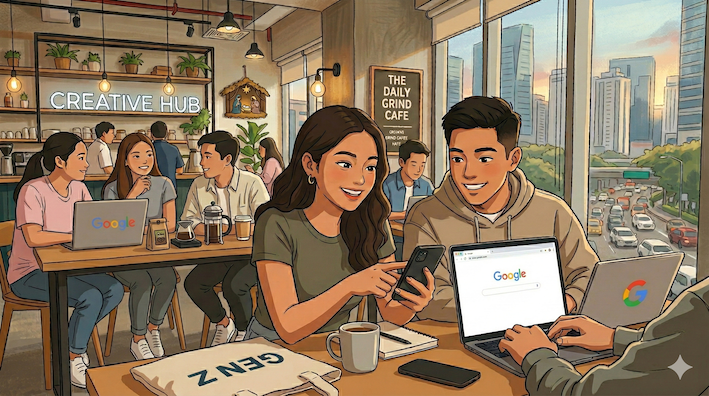
Gen Z is now the most active generation on Search, a trend clearly reflected in the way people across Southeast Asia including Philippines are engaging with the platform. AI is taking Search beyond its foundation of providing information, transforming it into a truly intelligent partner.
Powered by Google’s most advanced multi-modal reasoning model Gemini 3.1, Search can have an intuitive, back-and-forth conversation and it will get people’s complex and highly nuanced intent.
As AI natives, this shift resonates with Gen Zs. They are no longer just entering keywords, they are researching, planning, brainstorming, and even having conversations with Search. AI-powered features like AI Mode and Search Live make it faster, more natural, and more intuitive to find and act on information, allowing people to search in multimodal ways including text, voice and visual. As a result, Gen Z has emerged as the most active generation on Search. Signed-in users globally aged 18 to 24 now issue more daily queries than any other age group. Google sees over 5 trillion searches annually with Gen Z driving this growth, showing Search is more relevant than ever
The Philippines’ young, AI-native population uses Search to expand their world and make decisions they can trust
In the Philippines, this shift is even more undeniable.
The country has one of the youngest, most AI-native populations in the world. Gen Zs lean heavily into Search, with 89% using it every day to make smarter, more intentional choices for a wide array of decisions. From researching on upcoming travel destinations to exploring the latest trends, this generation relies on Search to navigate the journey from curiosity to the final checkout—ensuring that they always make decisions that are guided by the reliable information they find online.
These days, social media might be where Gen Z discovers a trend, but Search is where they deep-dive about it and fact-check it. Instead of simply following a viral hype or long queues, they use Google reviews on Maps to find the truth behind the filter. They rely on Search to look up a brand’s history, find honest feedback, and compare prices to see if a product is actually worth the buzz. Search provides the credibility they need to make a move.
That’s because Search remains grounded in trust. When people use Search to ask questions, Google cross-checks AI responses and provides clickable sources for quick validation.
“As a travel content creator, I use Google Search a lot! I use it for my flights, not just to find a good deal, but to check which ones have less impact on the environment. It’s my way of traveling a bit more responsibly,” said popular Filipino content creator Arshie Larga.
“Plus it is my filter to avoid tourist traps! When I see a viral restaurant or food on social media, I make sure to consult Google Reviews,” he added.
“AI is the best thing that has happened to Search. Today, it can do much more than just provide information. AI is making Search more intelligent so it can converse interactively across formats and provide answers to people’s complex and nuanced questions. In Southeast Asia—home to one of the world’s youngest, most AI-native populations—we are seeing this shift play out in real-time. For this generation, Search has become a constant companion. They are engaging more deeply, visually, and through voice than any group before them. Whether it’s for learning, exploring a personal passion or making a high-stakes purchase, they rely on Search to make decisions they can trust,” said Sapna Chadha, Vice President, Google Southeast Asia and South Asia Frontier
Search is a natural extension of Gen Z fandoms and culture
For Gen Zs, Search is more than a utility. It is a digital home for their daily lives and passions. When it comes to what they love, Google is a natural extension of their fandoms, turning their curiosity into an immersive experience through hidden moments in Search called Easter Eggs.
From interactive trivia quests for icons like Taylor Swift, BTS, and the Southeast Asia Coachella sensation BINI, to adorable viral sensations like Punch the Monkey, Search speaks the language of Gen Zs. More than an intelligent engine, Search is part of the world that Gen Zs love.
Beyond these curated moments, Search reflects the real-time heartbeat of Gen Z culture through Google Trends. When a conversation starts buzzing, Trends allows people to tap into the pulse of the dialogue, providing the insights they need to join in and take action.
For Filipino Gen Z, nothing proved more powerful and buzzworthy than BINI ahead of their historic appearance at this year’s Coachella. “BINI Coachella” reached the top of the trends globally, as their “BLOOMS” fans celebrated the group bringing Southeast Asian Pride to the world stage.
To celebrate this historic momentum, Search on mobile now features a special tribute: searching BINI anywhere in the world triggers their signature ‘Ey’ gesture– the viral ‘hang loose’ write flick symbolizing confidence and positivity. It’s a testament to how Gen Z still trusts Search to open a whole new world of information and immersion for the culture, fandoms, and everything that they’re passionate about.
NEWS
Motorcycle taxi riders urge government to protect livelihoods, enact motorcycle taxi bill

1:11 p.m. April 25, 2026
Motorcycle taxi riders are calling on regulators and legislators to ensure that the protection of rider livelihoods remains at the center of any regulation governing the motorcycle taxi industry.
In a statement, Motorcycle Taxi Community Philippines chairman Romeo Maglunsod thanked the government for extending assistance to riders amid the continuing fuel crisis, saying the ₱5,000 aid provides meaningful relief for workers whose daily earnings are heavily affected by rising fuel costs.
“We are grateful for the assistance extended by the government to riders during the fuel crisis. For many riders, almost half of their daily income is already spent on fuel, and the ₱5,000 assistance is a big help,” Maglunsod said.
However, the group stressed that financial aid is only a temporary measure. It said long-term protection must come from policies that allow riders to earn decently, work with dignity, and continue supporting their families.
“At this time of crisis, no rider’s family should go hungry or suffer because of the lack of humane and stable livelihood,” Maglunsod said. “Any action from Congress must ensure the protection of the livelihoods of thousands of riders who work every day to provide for their families.”
The group said the passage of the motorcycle taxi bill is now urgent, noting that the government’s pilot study on motorcycle taxis has been running for almost a decade.
Maglunsod said any motorcycle taxi law must recognize the industry as part of the gig economy and must be anchored on the rights and interests of gig workers.
“What riders want is to remain the boss of their own livelihood. This means having the freedom to choose which platform to be active in, the ability to benefit from programs offered by different platforms, and the flexibility to strategize our own online hours,” he said.
The group also recommended that franchises or accreditation be granted directly to individual riders, similar to the model used for transport network vehicle service drivers, instead of placing riders under platform-held franchises.
Under this setup, Maglunsod said riders would have greater control over their own operations, while platforms would serve as tools that help them access passengers, incentives, and support programs.
“The rider should hold the power to decide how to earn a living. Platforms should be instruments that support riders, not structures that limit their freedom,” he said.
The group also underscored the public service role of motorcycle taxi riders, saying their continued presence on the road helps commuters get to work, school, hospitals, and other essential destinations.
“Every hour that riders are on the road means more Filipinos are able to travel, report to work, and reach the services they need,” Maglunsod said.
“Our call is clear: protect rider livelihoods, protect our freedom as gig workers, and pass the motorcycle taxi bill in a way that is fair, just, and humane,” he added.
TECHNOLOGY
All-new MacBook Neo launches at Power Mac Center
9:22 p.m. April 24, 2026
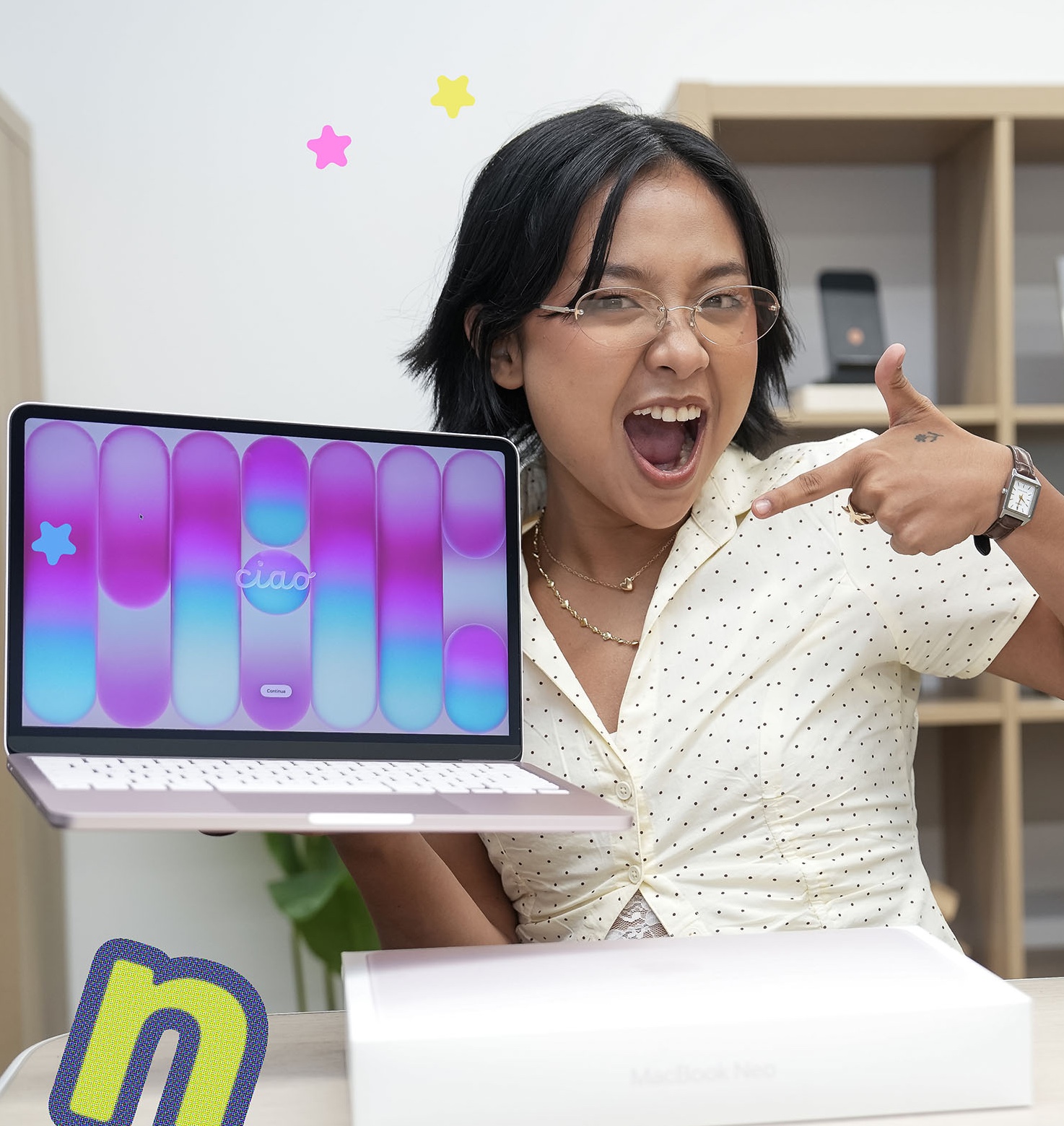
Premier Apple partner Power Mac Center (PMC) unveiled the all-new MacBook Neo in a fun and vibrant simultaneous launch in Greenbelt 3 and SM Megamall.
Customers who joined the launch received the event exclusive bundle including an AirPods Pro 2 and AirTag 4-pack, stackable with over P12,000 worth of freebies for those with qualified pre-orders. In addition, those in Greenbelt 3 and SM Megamall who lined up until 7PM also got a chance to win up to P600,000 worth of prizes (P300,000 per location).
While attendees were the first to access exclusive perks, PMC is extending its opening promotions over the coming days, ensuring more customers can take part in the excitement.
“We are taking Apple fans on a lifestyle journey worthy of the anticipation for the new MacBook Neo. With every device Power Mac Center launches, we make sure our customers know we stand behind their purchase, helping them choose better, set up faster, and get more out of what they’re upgrading to,” PMC Director for Marketing and Product Management Joey Alvarez.
Mac&Me: Easy to use and easy to own, Made for More
As the premier Apple partner in the Philippines, PMC extends its expertise to support customers, reinforcing how the Mac is made for more than ordinary, with powerful capabilities in completing tasks both for work and play.
Now available in all Power Mac Center stores nationwide, the MacBook Neo is easy to use and easy to own with these exclusive offers. Terms and conditions apply.
- Accessories: Enjoy up to 50% off on a wide selection of accessories until April 30, 2026. This offer is valid for straight payments only and is available with any MacBook Neo payment option.
- 1 Infinite: As a limited “double burn” offer (1 point = P2) from PMC’s loyalty program 1 Infinite, members can redeem up to 2,500 points (P5,000 off), with no minimum spend required. This offer is applicable to both device and accessory purchases and is valid from April 23 to 26, 2026 only.
- UpTrade: Score up to P4,000 in additional trade-in value when you trade in your MacBook Air (M2 or earlier) and upgrade to the all-new MacBook Neo or MacBook Air (M5) from April 23 to May 10, 2026. Offer available at all Power Mac Center stores nationwide.
- Mobile Care and Basecamp: Customers who purchase the MacBook Neo until April 30, 2026 can also receive a 90-day complementary software fix from Mobile Care Service Center, PMC’s official service arm, and free training for MacBook Neo + AI Toolkit for Beginners provided by Basecamp, PMC’s official training arm.
- To avail the free training, please register here <https://docs.google.com/forms/d/e/1FAIpQLSe_z0LeHOubTSrH4guDE7H1gaZICevgaQ15fF0tqxI7CB-aQw/viewform>.
- Partners: Get special Grab vouchers on purchases of the MacBook Neo until April 24, 2026.
- Education, SMB, and Enterprise: PMC also offers special Education pricing for students and members of the academe. Meanwhile, businesses and organizations looking to boost their operational efficiency and service delivery can approach any PMC store for a consultation on Apple integration.
Get the best deals with your cards and credit providers
Major bank and non-bank financial institutions offer flexible payment options of up to 36 months installment, 0% interest, Buy Now Pay Later modes, cashbacks, and bonus Power Mac Center Gift Certificates. Do note that these offers are available via in-store purchases only. Check with your financial providers for the full mechanics.
Before completing your purchase, make sure you’re a member of 1 Infinite. To join, download the 1 Infinite app in the App Store <http://bit.ly/4hljdr2> or Google Play <https://bit.ly/42ovsyK> and create an account or log in using your registered email address.
Present your membership when transacting in stores or input details in the Web Store <powermaccenter.com> to earn points, redeem rewards, and enjoy perks from Basecamp and Mobile Care. For full details, visit the site <https://powermaccenter.com/pages/1-infinite>.
Live launch with musical sets and interactive games
The MacBook Neo introduction unfolded as a full launch experience, with performances and interactive activities energizing the crowd before the official unveiling. Headlined by DJs Vernard Tan (in Greenbelt 3) and Ailishia (in Megamall), the shows set the tone for the night designed to engage this generation of tech consumers.
The event was supported by Power Mac Center’s brand partners Belkin, STM, BPI, UnionBank, and Home Credit, as well as Shokz, in partnership with 1 Infinite.
Don’t miss exciting announcements and special promos! Follow the OFFICIAL Power Mac Center accounts on Facebook, Instagram, X, TikTok, Viber, and YouTube.
#PMCExperience #MacMadeForMore


Gen Z is Google’s most active users as AI transforms Search into an intelligent partner

Motorcycle taxi riders urge government to protect livelihoods, enact motorcycle taxi bill

All-new MacBook Neo launches at Power Mac Center