
NEWS
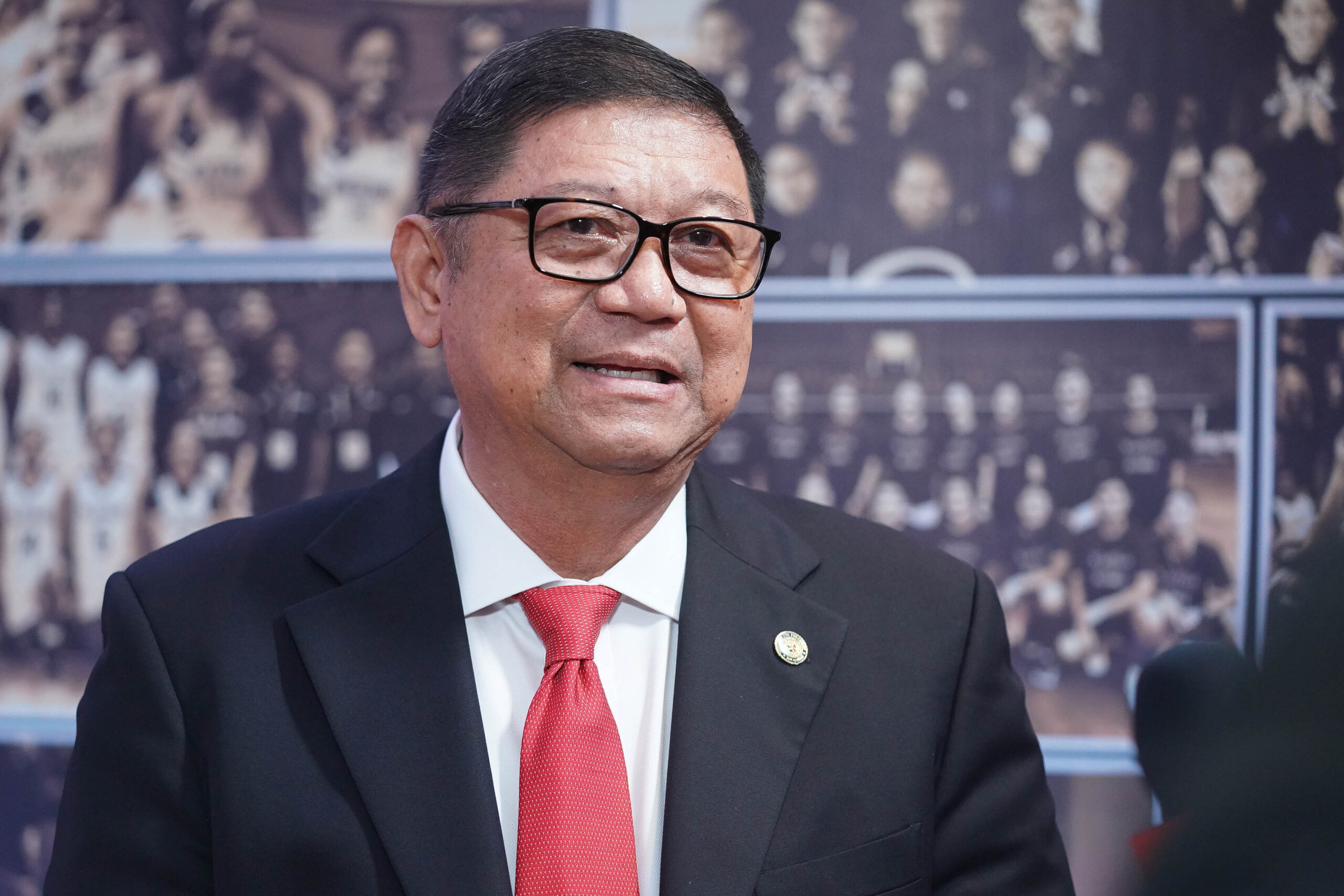
Ramirez: PH’s sports success a result of hard work, sacrifices of athletes, coaches
June 14, 2022 4:00 p.m.
THE OUTSTANDING success of Philippine sports in major competitions, highlighted by weighlifter Hidilyn Diaz’s historic gold in the Tokyo Olympics, the last six years was not by chance or conjured out of thin air, stressed Philippine Sports Commission chairman William ‘Butch’ Ramirez on Tuesday.
“These achievements were not done by magic. Hindi ito tsamba,” noted Ramirez in what he described as his ‘exit interview’ during a solo appearance in the first face-to-face Philippine Sportswriters Association (PSA) Forum in over two years at the Rizal Memorial Sports Complex administration building audio visual room in Manila.
“Kung wala kang itinanim, wala ka rin aanihin,” added the PSC honcho of the hundreds of millions of pesos the government sports agency has poured into elite sports and national athletes that led to the country’s fruitful campaigns overseas.
“I was blessed that we had the money when I came back as PSC chairman and knew the need of our national athletes since I stayed with them at the Philsports Complex dorms in Pasig,” said Ramirez in the session backed by San Miguel Corporation (SMC), MILO, PSC, Philippine Olympic Committee, Unilever, Amelie Hotel Manila, and the Philippine Amusement and Gaming Corporation (PAGCOR).
He disclosed the PSC invested P600 million in elite sports at the start of his second term in 2016, P800 million in 2017, then over P1 billion in 2019 as the national athletes primed themselves for the country’s hosting of the 30th Southeast Asian Games.
The fruits of that investments resulted in the country bagging four golds, two silvers and five bronzes in the highly-competitive 2018 Asian Games in Indonesia, recapturing the SEA Games overall crown in 2019 at home with 149 gold, 117 silver and 121 bronze medals, and its first gold medal in the Olympics in Tokyo last year courtesy of the heroics of Diaz.
Counting the Olympic silver medals of boxers Carlo Paalam and Nesthy Petecio, and the bronze of fellow fighter Felix Eumir Marcial, the Tokyo Olympic edition was the best Philippine outing in the quadrennial Summer Games since Filipinos made their debut in the 1900 Paris Olympics.
“These so-called golden years of Philippines was the result of the hard work and sacrifices of our athletes and coaches. And it was people’s money, taxpayer’s money that made it all possible,” Ramirez underscored.
“The PSC has not been remiss in supporting our Philippine delegations to overseas competitions. This has been very, very clear,” he said, adding that the feats were a “collaborative effort of the PSC, Philippine Olympic Committee, and National Sports Associations.”
To sustain the gains in Philippine sports in the next six years, Ramirez said the new leaders of the agency should learn how to adapt to the changing conditions
“One of the most important pillars of management is adaptability. Our leaders need to be alert and adapt to the times. Hindi puwedeng patulog-tulog,” he said.
“We have to provide money, provide proper support for our sports such as sports science and provide good governance by our leaders. You will not achieve this high level of performance in international competition without these provisions,” the PSC chief explained.
Ramirez said he was ready to step down at the end of the month after more than two decades of being associated with PSC, beginning as commissioner in 1998 under the administration of the late chairman Carlos Tuason.
“I am ready to return to Davao but am willing to be an adviser and share my experience and knowhow with the incoming PSC leadership,” the 72-year-old Davao City native said.










NEWS
Gen Z is Google’s most active users as AI transforms Search into an intelligent partner

6:50 p.m. April 26, 2026
Gen Z is now the most active generation on Search, a trend clearly reflected in the way people across Southeast Asia including Philippines are engaging with the platform. AI is taking Search beyond its foundation of providing information, transforming it into a truly intelligent partner.
Powered by Google’s most advanced multi-modal reasoning model Gemini 3.1, Search can have an intuitive, back-and-forth conversation and it will get people’s complex and highly nuanced intent.
As AI natives, this shift resonates with Gen Zs. They are no longer just entering keywords, they are researching, planning, brainstorming, and even having conversations with Search. AI-powered features like AI Mode and Search Live make it faster, more natural, and more intuitive to find and act on information, allowing people to search in multimodal ways including text, voice and visual. As a result, Gen Z has emerged as the most active generation on Search. Signed-in users globally aged 18 to 24 now issue more daily queries than any other age group. Google sees over 5 trillion searches annually with Gen Z driving this growth, showing Search is more relevant than ever
The Philippines’ young, AI-native population uses Search to expand their world and make decisions they can trust
In the Philippines, this shift is even more undeniable.
The country has one of the youngest, most AI-native populations in the world. Gen Zs lean heavily into Search, with 89% using it every day to make smarter, more intentional choices for a wide array of decisions. From researching on upcoming travel destinations to exploring the latest trends, this generation relies on Search to navigate the journey from curiosity to the final checkout—ensuring that they always make decisions that are guided by the reliable information they find online.
These days, social media might be where Gen Z discovers a trend, but Search is where they deep-dive about it and fact-check it. Instead of simply following a viral hype or long queues, they use Google reviews on Maps to find the truth behind the filter. They rely on Search to look up a brand’s history, find honest feedback, and compare prices to see if a product is actually worth the buzz. Search provides the credibility they need to make a move.
That’s because Search remains grounded in trust. When people use Search to ask questions, Google cross-checks AI responses and provides clickable sources for quick validation.
“As a travel content creator, I use Google Search a lot! I use it for my flights, not just to find a good deal, but to check which ones have less impact on the environment. It’s my way of traveling a bit more responsibly,” said popular Filipino content creator Arshie Larga.
“Plus it is my filter to avoid tourist traps! When I see a viral restaurant or food on social media, I make sure to consult Google Reviews,” he added.
“AI is the best thing that has happened to Search. Today, it can do much more than just provide information. AI is making Search more intelligent so it can converse interactively across formats and provide answers to people’s complex and nuanced questions. In Southeast Asia—home to one of the world’s youngest, most AI-native populations—we are seeing this shift play out in real-time. For this generation, Search has become a constant companion. They are engaging more deeply, visually, and through voice than any group before them. Whether it’s for learning, exploring a personal passion or making a high-stakes purchase, they rely on Search to make decisions they can trust,” said Sapna Chadha, Vice President, Google Southeast Asia and South Asia Frontier
Search is a natural extension of Gen Z fandoms and culture
For Gen Zs, Search is more than a utility. It is a digital home for their daily lives and passions. When it comes to what they love, Google is a natural extension of their fandoms, turning their curiosity into an immersive experience through hidden moments in Search called Easter Eggs.
From interactive trivia quests for icons like Taylor Swift, BTS, and the Southeast Asia Coachella sensation BINI, to adorable viral sensations like Punch the Monkey, Search speaks the language of Gen Zs. More than an intelligent engine, Search is part of the world that Gen Zs love.
Beyond these curated moments, Search reflects the real-time heartbeat of Gen Z culture through Google Trends. When a conversation starts buzzing, Trends allows people to tap into the pulse of the dialogue, providing the insights they need to join in and take action.
For Filipino Gen Z, nothing proved more powerful and buzzworthy than BINI ahead of their historic appearance at this year’s Coachella. “BINI Coachella” reached the top of the trends globally, as their “BLOOMS” fans celebrated the group bringing Southeast Asian Pride to the world stage.
To celebrate this historic momentum, Search on mobile now features a special tribute: searching BINI anywhere in the world triggers their signature ‘Ey’ gesture– the viral ‘hang loose’ write flick symbolizing confidence and positivity. It’s a testament to how Gen Z still trusts Search to open a whole new world of information and immersion for the culture, fandoms, and everything that they’re passionate about.
NEWS
Motorcycle taxi riders urge government to protect livelihoods, enact motorcycle taxi bill

1:11 p.m. April 25, 2026
Motorcycle taxi riders are calling on regulators and legislators to ensure that the protection of rider livelihoods remains at the center of any regulation governing the motorcycle taxi industry.
In a statement, Motorcycle Taxi Community Philippines chairman Romeo Maglunsod thanked the government for extending assistance to riders amid the continuing fuel crisis, saying the ₱5,000 aid provides meaningful relief for workers whose daily earnings are heavily affected by rising fuel costs.
“We are grateful for the assistance extended by the government to riders during the fuel crisis. For many riders, almost half of their daily income is already spent on fuel, and the ₱5,000 assistance is a big help,” Maglunsod said.
However, the group stressed that financial aid is only a temporary measure. It said long-term protection must come from policies that allow riders to earn decently, work with dignity, and continue supporting their families.
“At this time of crisis, no rider’s family should go hungry or suffer because of the lack of humane and stable livelihood,” Maglunsod said. “Any action from Congress must ensure the protection of the livelihoods of thousands of riders who work every day to provide for their families.”
The group said the passage of the motorcycle taxi bill is now urgent, noting that the government’s pilot study on motorcycle taxis has been running for almost a decade.
Maglunsod said any motorcycle taxi law must recognize the industry as part of the gig economy and must be anchored on the rights and interests of gig workers.
“What riders want is to remain the boss of their own livelihood. This means having the freedom to choose which platform to be active in, the ability to benefit from programs offered by different platforms, and the flexibility to strategize our own online hours,” he said.
The group also recommended that franchises or accreditation be granted directly to individual riders, similar to the model used for transport network vehicle service drivers, instead of placing riders under platform-held franchises.
Under this setup, Maglunsod said riders would have greater control over their own operations, while platforms would serve as tools that help them access passengers, incentives, and support programs.
“The rider should hold the power to decide how to earn a living. Platforms should be instruments that support riders, not structures that limit their freedom,” he said.
The group also underscored the public service role of motorcycle taxi riders, saying their continued presence on the road helps commuters get to work, school, hospitals, and other essential destinations.
“Every hour that riders are on the road means more Filipinos are able to travel, report to work, and reach the services they need,” Maglunsod said.
“Our call is clear: protect rider livelihoods, protect our freedom as gig workers, and pass the motorcycle taxi bill in a way that is fair, just, and humane,” he added.
NEWS
Gift of Life Rotary Club of San Juan West in action

6:33 p.m. April 22, 2026
For over 15 years, the Gift of Life program of the Rotary Club of San Juan West has provided life-saving heart surgeries and medical assistance to children with congenital heart disease, offering hope and a second chance at life to indigent families.
Through strong collaboration with local and international Rotary clubs, partner organizations, local government units, and dedicated medical teams at the Philippine Heart Center, the program continues to make critical pediatric cardiac care possible.
The initiative has also expanded its reach to remote communities through partnerships with grassroots groups such as the Heart Warriors of Ifugao, supporting patients from areas like Banaue, Ifugao.
This Rotary year, the program has assisted eight (8) children, with projections reaching up to ten (10) beneficiaries, alongside sustained fundraising efforts such as “Concert for a Cause” and other community-driven initiatives.
This Rotary year, the Gift of Life stands as a lasting legacy of Good President Emman Caguimbal, whose leadership strengthened the club’s humanitarian commitment.
The project is chaired by Past District Governor Augie Soliman, whose stewardship continues to guide its mission of restoring hope and saving lives.
Indeed, through Gift of Life, the Rotary Club of San Juan West continues to live out Rotary’s enduring promise: Service Above Self—one healed heart at a time.


Gen Z is Google’s most active users as AI transforms Search into an intelligent partner

Motorcycle taxi riders urge government to protect livelihoods, enact motorcycle taxi bill

All-new MacBook Neo launches at Power Mac Center