Miller seeks redemption at Winter Olympics
February 15, 2022 5:19 p.m.
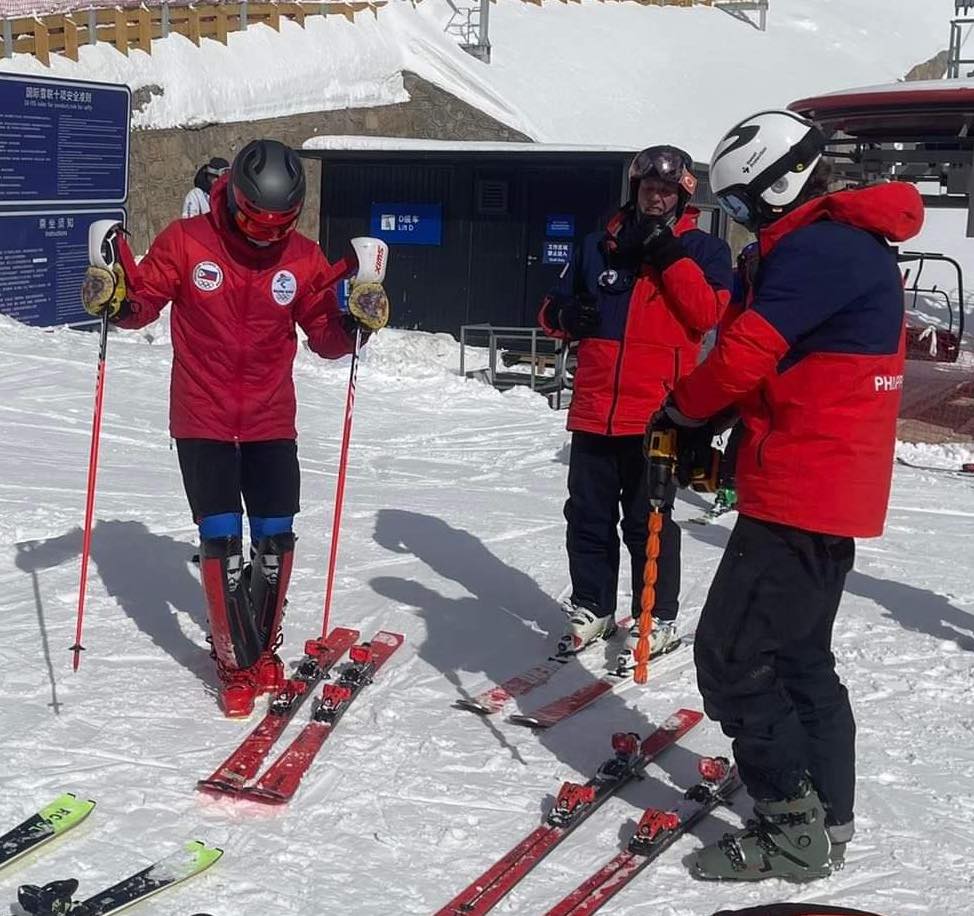
YANQING, China—Asa Miller gets a shot at redemption on Wednesday in the highly unpredictable men’s slalom of the Beijing 2022 Winter Olympics.
After taking a day’s off on Monday to shake off frustration from his mishap in the giant slalom on Sunday, Miller took to the course on Tuesday not only to get his legs and arms get the feel of the course again, but reset his focus as well.
“Trust your feet and trust yourself as the skier you are,” American coach Will Gregorak told his 21-year-old and two-time Olympian ward in between training runs at the National Alpine Skiing Centre. “It’s similar to what I told you before—the best you can possibly ski on race day is to ski like yourself.”
The start list won’t be known until during the coaches’ meeting set later Tuesday, but definitely, Miller will be up against world-class opponents seeking Olympic glory—including the man they call “The Rocket,” Dave Ryding.Most eyes are on Ryding, whose tough task is to end Great Britain’s lengthy wait for a first Olympic medal in Alpine skiing. Alain Baxter won Britain’s first Olympic medal in Alpine skiing, but was stripped of his slalom bronze at the 2002 Salt Lake City Games for using a decongestant that contained a banned stimulant.
Ryding, now 35, is in his fourth Olympics.
Gregorak was aggressive in helping Miller put his mind on the course.
“You’re not going to become another person and you are already an excellent skier,” the 31-year-old coach told the Filipino-American athlete. “All you have to do is find the feeling that you already know.”
Gregorak added: “When you get into the gate, it’s just you and the course. Go and have some fun by making your best turn.”
Just how unpredictable was Alpine skiing this season? There were six World Cup slaloms with six different winners with only four skiers making the podium more than once and no one doing it more than twice.
Miller was one of 33 skiers—out of 84 starters—who were DNF (Did Not Finish) in the giant slalom on Sunday when natural snow fell incessantly for the first time in the Games during the weekend and rendered visibility poor at the Ice River course.
Besides Ryding, the other favorites include World Cup veteran Lucas Braathen of Norway, 2017 world champion Manuel Ferrer of Austria, 2018 world junior champion Noel Clement of France, and Pyeongchang 2018 Olympics team event gold medalist Daniel Yule of Great Britain.Miller, whose Olympic campaign is fully supported by the Philippine Sports Commission, concentrated on his training and only smiled or waved his hand when sought for an interview.Gregorak, meanwhile, said that the slalom “hill is a little bit an easier place than giant slalom” so he is expecting more racers to finish.
“It’s an easier slalom hill than GS [giant slalom] where the upper and lower pitches were very difficult,” said Gregorak, who owns 23 World Cup stints while playing for the US team from 2008 to 2014. “This is exactly a mellow slalom, not a particularly difficult hill so there should be plenty of skiers who will go pretty intensely.”
“GS is the purest form of ski racing and technically the most difficult,” he said. “Slalom comes at you the fastest even though you don’t move as fast as other events, but not technically difficult like GS.”
The giant slalom’s first run is also set at 10 a.m. and the second run is slated at 1:45 p.m.









COUNT
DigiPlus levels up user engagement with ArenaPlus’ P1B Prediction Giveaway

5:10 p.m. April 7, 2026
DigiPlus Interactive Corp., the country’s pioneer and leader in digital entertainment, through its flagship sportsbook platform ArenaPlus, formally launched its P1 Billion Prediction Giveaway last Saturday, March 21, heralding a major step-up in its customer acquisition and retention strategy.
This initiative is anchored by a high-stakes prediction challenge designed to invite new users onto ArenaPlus, while also deepening player participation and reinforcing brand leadership in the Philippine online sportsbook space. Central to this campaign is the introduction of a localized tournament bracket game—a staple in American sports culture that ArenaPlus is pioneering for the local market.
“We want to bring some excitement for the Filipino basketball fans, especially since we know that the NBA is the most popular sport here. The bracket game is actually very common in the US. It’s been running there constantly for years, but the Philippines has never had that experience. We want to bring that here,” said ArenaPlus Head Erick Su.
By offering the ₱1 Billion Prediction Giveaway as a free-to-play initiative, DigiPlus enables fans to engage in the tournament without any monetary commitment. Su emphasized that the campaign is designed to provide a safe, entertainment-led experience, with the bracket format sustaining interest from the opening round of the Playoffs through the Finals, where one team ultimately prevails.
“I think the excitement will be from beginning to the end. Because the bracket game covers the whole stage of the Playoffs, fans can expand their predictions and go along with the whole process and expect that they can win,” Su said. “So that’s going to bring a lot of excitement. And this is completely free and very safe as we want to entertain Filipinos.”
Amplifying the campaign that launched at Mall of Asia Sky Deck Amphitheater in Pasay City was premier host and actor Luis “Lucky” Manzano, who was also introduced as ArenaPlus’ latest brand ambassador. Joining Manzano were fellow endorsers Gilas Pilipinas naturalized player Justin Brownlee, multi-time champion assistant coach Bong Ravena, and his son, international pro Thirdy, who are effectively raising ArenaPlus’ visibility while also broadening the brand’s demographic reach.
“At ArenaPlus, we are relentless with our commitment to elevate our players’ experience, making sports more fulfilling, more immersive, and more rewarding for every Filipino,” said ArenaPlus Marketing Head Hannah Bagui as ArenaPlus continues to differentiate itself by pioneering accessible digital sports entertainment.
While the campaign is designed to drive wide participation, ArenaPlus emphasized that it intends to maintain strict platform integrity through its rigorous eKYC (electronic Know Your Customer) process. Such a guardrail bolsters an already rich suite of responsible gaming tools built into ArenaPlus, such as options to set daily gaming durations, customize specific gaming schedules, and establish daily loss limits. This ensures that while the campaign achieves great reach, it does so within a secure, transparent, and compliant environment that builds trust.
Through these strategic customer activations and continuous platform innovation, DigiPlus Interactive Corp. continues to solidify its legacy as the definitive pioneer of the Philippine digital entertainment industry, driving growth while also redefining user engagement
NEWS
COA named WTO External Auditor, begins six-year term

7:11 p.m. April 6, 2026
The Commission on Audit (COA) has been appointed as the new External Auditor of the World Trade Organization, reflecting its credibility and strong reputation in international auditing and growing influence in advancing good governance around the world.
The Philippines’ audit body, an independent constitutional commission, succeeds France’s supreme audit institution, the Cour des Comptes, and will serve a non-renewable term of six years.
In its role, COA will oversee the audit of the WTO’s financial statements, pension plan, and operations in line with the Organization’s financial regulations.
The audit body was selected by the WTO General Council on the recommendation of its Committee on Budget, Finance and Administration (CBFA). The committee cited how COA’s proven track record in auditing international organizations will help strengthen financial accountability and reinforce trust in the WTO’s governance framework.
“COA’s appointment as the WTO’s new external auditor demonstrates how the world views our capabilities as an independent audit body– reliable, trustworthy, and world-class. We are committed to upholding the highest standards of independence and professionalism in our work with the WTO, continuing our mission to promote transparency and accountability in international institutions,” said COA Chairperson Gamaliel A. Cordoba.
He said the WTO appointment represents a significant milestone for COA, illustrating its expanding influence and growing force in advancing transparency, accountability, and good governance not just in the Philippines, but around the world.
COA earlier served as External Auditor for several major specialized United Nations agencies, including the World Health Organization (WHO), the International Labor Organization (ILO), the United Nations Industrial Development Organization (UNIDO), and the Food and Agriculture Organization (FAO).
In these assignments, COA was commended for its rigorous standards and contribution to strengthening transparency and accountability in global governance. #
COUNT
What happened in Calvary 2000 years ago
11:39 a.m. April 5, 2026
BY NAZARENE A. LEYCO
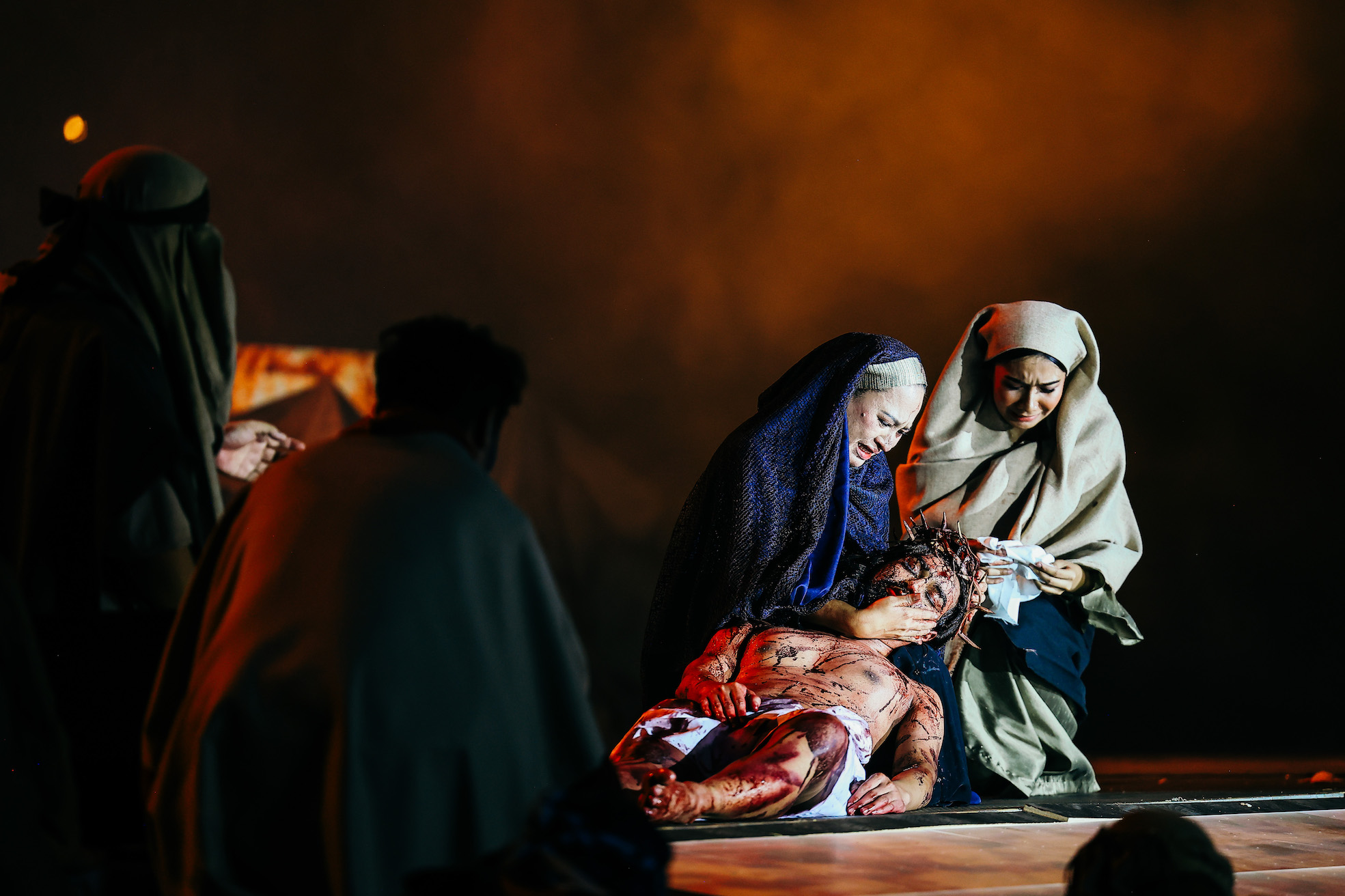
In the heavy silence of Good Friday, April 3, the ordinary, familiar rhythms of Marikina fell silent before a higher calling. The ordinary gave way to the transcendent, as the city gathered for lenten Friday tradition, the two-thousand-year distance between Calvary and the present dissolved, transfiguring the stadium into a consecrated ground where the sacred drama was not merely remembered, but relived.
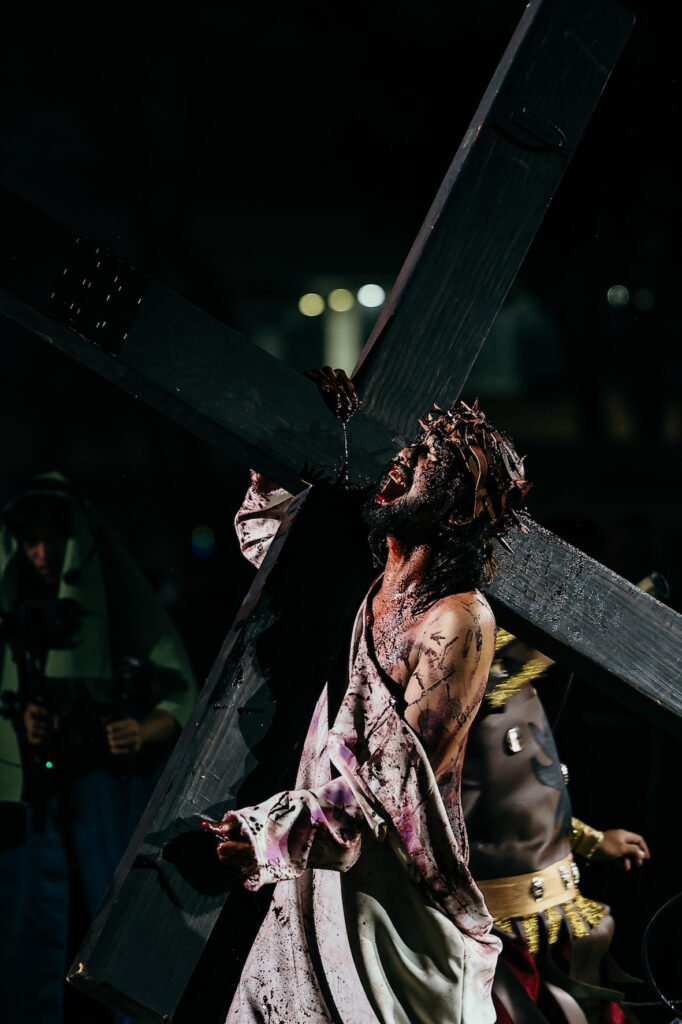
The evening was illuminated by “JESUS: A Grand Senakulo Musical Play,” a masterful rendition of the life, sacrifice, and triumph of our Lord Jesus Christ. This artistic endeavor transcended mere performance, becoming a living tapestry that wove together the dramatic narratives of faith, suffering, and redemption. As the story unfolded on stage, the audience was transported back 2,000 years, witnessing anew the pivotal moments that forever altered the course of human history.
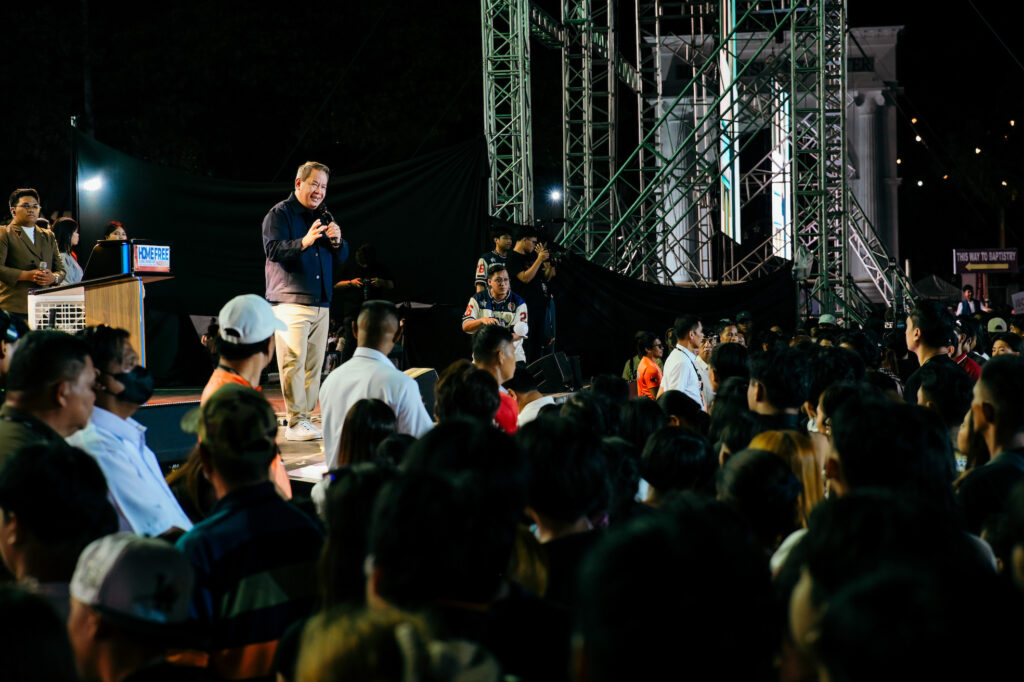
Following this poignant portrayal, Global Evangelist Jonathan S. Ferriol stepped forward to deliver a sermon titled “What Happened at Calvary.” With profound eloquence and spiritual conviction, he unpacked the timeless truths encapsulated in that singular event. His words resonated deeply within the vast congregation, reminding all present of the immutable promise held within the Cross, a message that has echoed through millennia, steadfast and unchanging, offering.

“We are all dying in our sins before Christ came into our lives and delivered us from eternal damnation. No good works can save us all, otherwise, Jesus would not have come down from heaven to rescue us all,” the apostle enthused.
He also underscored that the message of the Cross remains unchanged from two millennia ago to this very day, a message of hope that pierces the darkest valleys, of forgiveness that wipes the slate clean, of freedom that breaks the weight of sin, of love revealed in a sacrifice beyond measure, and of triumph that conquers death and ushers in eternal life.
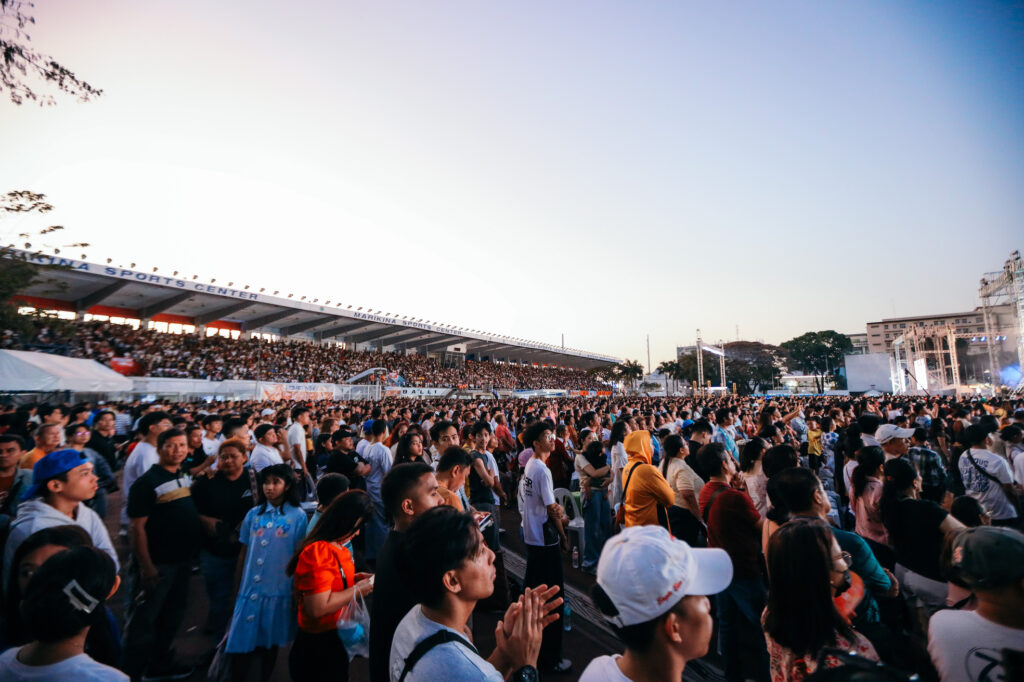
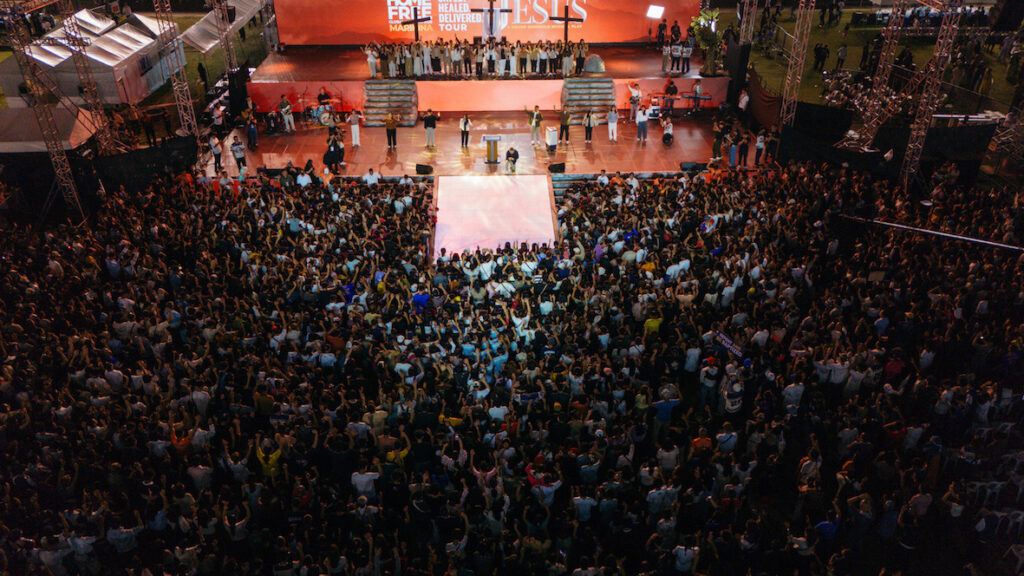
In a stirring response to this unwavering message, thousands rose from their seats, their hearts open and ready to embrace Christ as their Lord and Savior. In a magnificent display of faith and commitment, they immediately proceeded to receive water baptism, symbolizing their new beginning and profound connection to the divine.
This sacred assembly at the Marikina Sports Center was more than just a gathering; it was a powerful reaffirmation of the Cross’s timeless relevance in an ever-changing world. It underscored that while modalities evolve, the core tenets of freedom, hope, forgiveness, love, and triumph remain the eternal anchors of humanity’s spiritual quest. Each soul touched that evening became a living testament to a message that, two millennia later, continues to transform lives and inspire multitudes, proving that the essence of Calvary’s sacrifice is as potent and transformative today as it was in the beginning.
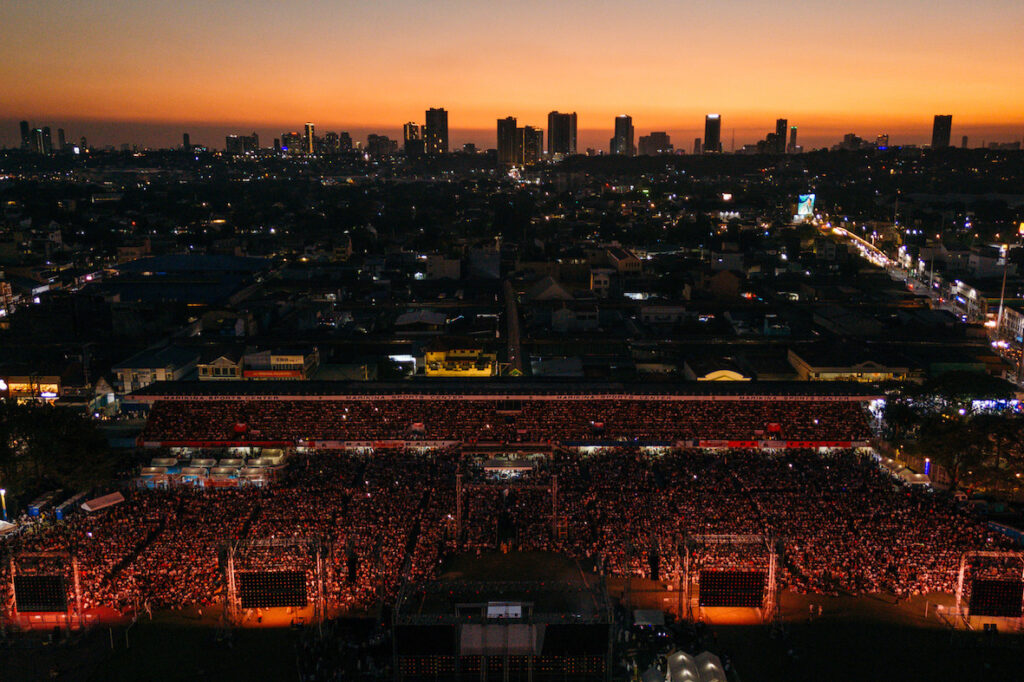
In a time marked by unrest, uncertainty, and the quiet exhaustion of a world searching for answers in all the wrong places, the significance of that night becomes even more pronounced.
What unfolded was not a retreat into tradition, but a confrontation with a truth that refuses to age or lose its claim on the human soul. The same fractures that defined humanity centuries ago. sin, despair, brokenness, persist today, only clothed in more modern forms, and no advancement has yet resolved them. This is why the need for Christ is neither outdated nor optional, but enduring and absolute.
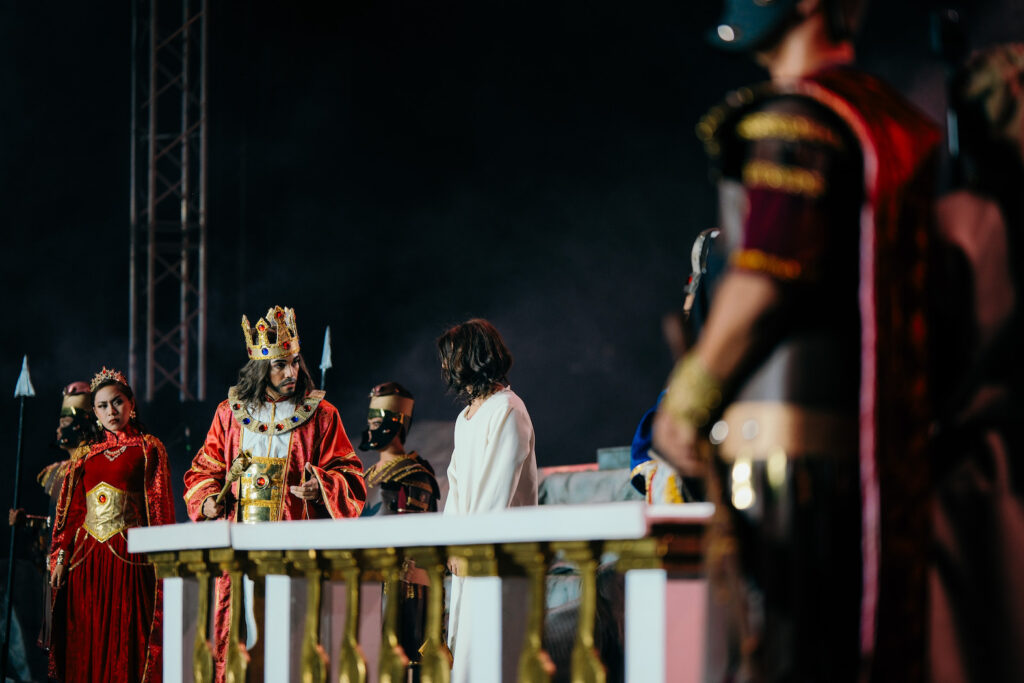
The Cross does not merely belong to history; it speaks with urgency into the present, meeting the deepest needs of every generation. And in that gathering, it became unmistakably clear: as long as humanity wrestles with darkness, there will remain an unending, unrelenting need for the light that only Christ can give.
Capping the second leg of the HFGC with a resonant message of hope and love, the PMCC gathered at daybreak to celebrate God’s absolute victory over death, where the silence of the tomb was finally shattered by the joy of the risen Christ.


DigiPlus levels up user engagement with ArenaPlus’ P1B Prediction Giveaway

COA named WTO External Auditor, begins six-year term

What happened in Calvary 2000 years ago